
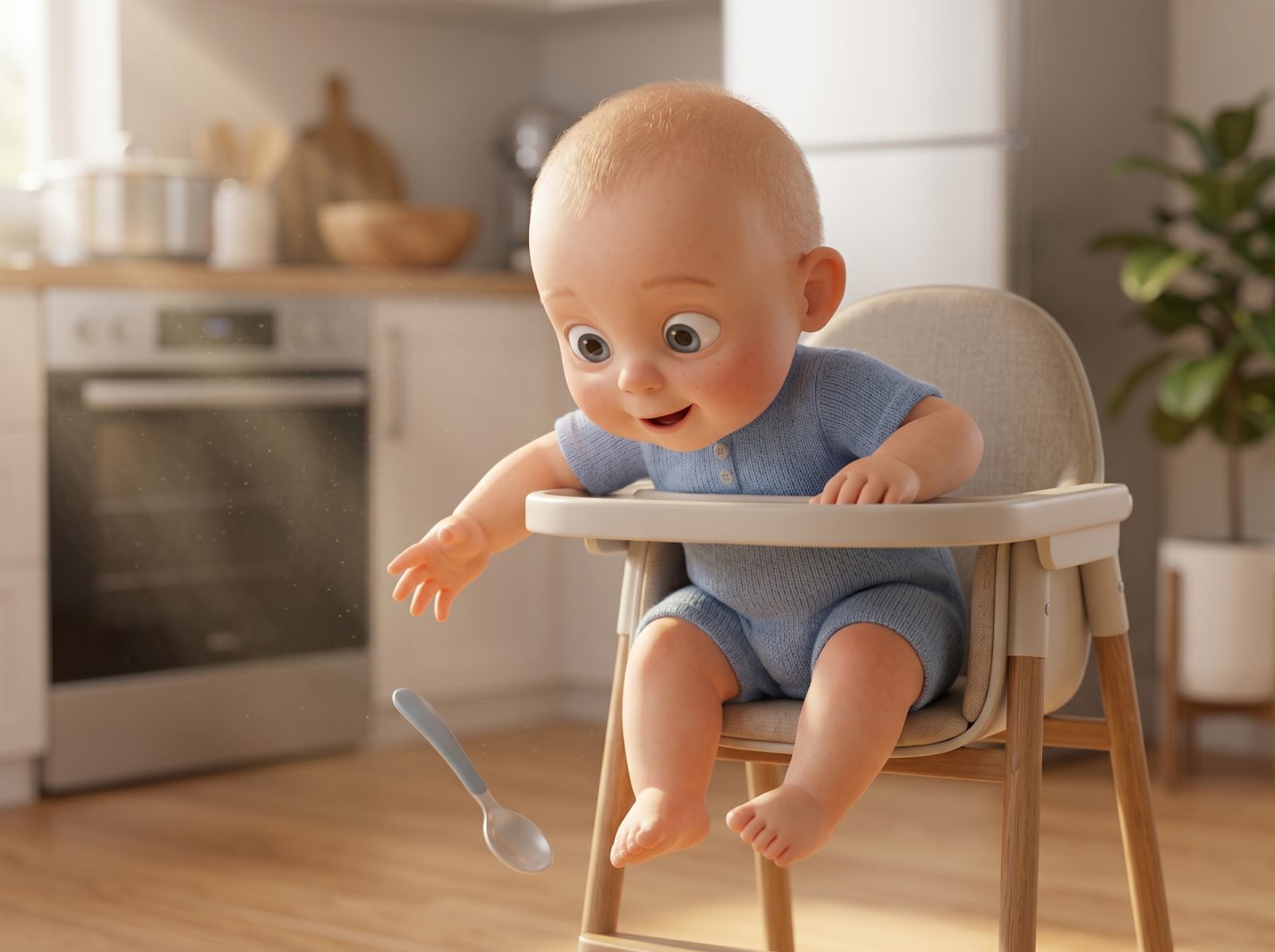
Explores gravity via the trajectory schema (The Drop Game)
Typical Timing & Development Window
Visual Timeline & Milestone Benchmarks
What these numbers mean
The average age babies first begin showing early signs of this skill. Before this, it's simply too early — there's nothing to worry about.
The midpoint age: half of babies have reached this milestone by here, half a little later. It's a typical target, not a deadline.
How spread out the timing is. About two-thirds of babies achieve it within one standard deviation of the median (the shaded band, wk 44–52). Wide bands mean a normal range of variation.
A gentle check-in point. If your baby hasn't shown this by around here, it can be worth mentioning to your pediatrician — most often it's still perfectly fine, just later.
About this milestone
The toddler intentionally and repeatedly throws, drops, or casts objects from high surfaces (like a high chair) to visually and auditorily track their flight paths and impacts. This is an essential early physics experiment, not bad behavior.
- 1. Provide safe, non-breakable items (silicone cups, soft blocks) specifically for dropping and throwing play.
- 2. Hand the item back a few times while naming the physical event ('Down it goes! Plop!').
- 3. Set up safe target zones on the floor, such as dropping a soft toy into a wide cardboard box.
- 1. Avoid scolding or punishing the toddler for dropping items from their tray, as this represses critical cognitive cause-and-effect mapping.
- 2. Do not allow heavy, glass, or dangerous household objects within their reach during high-chair segments.