
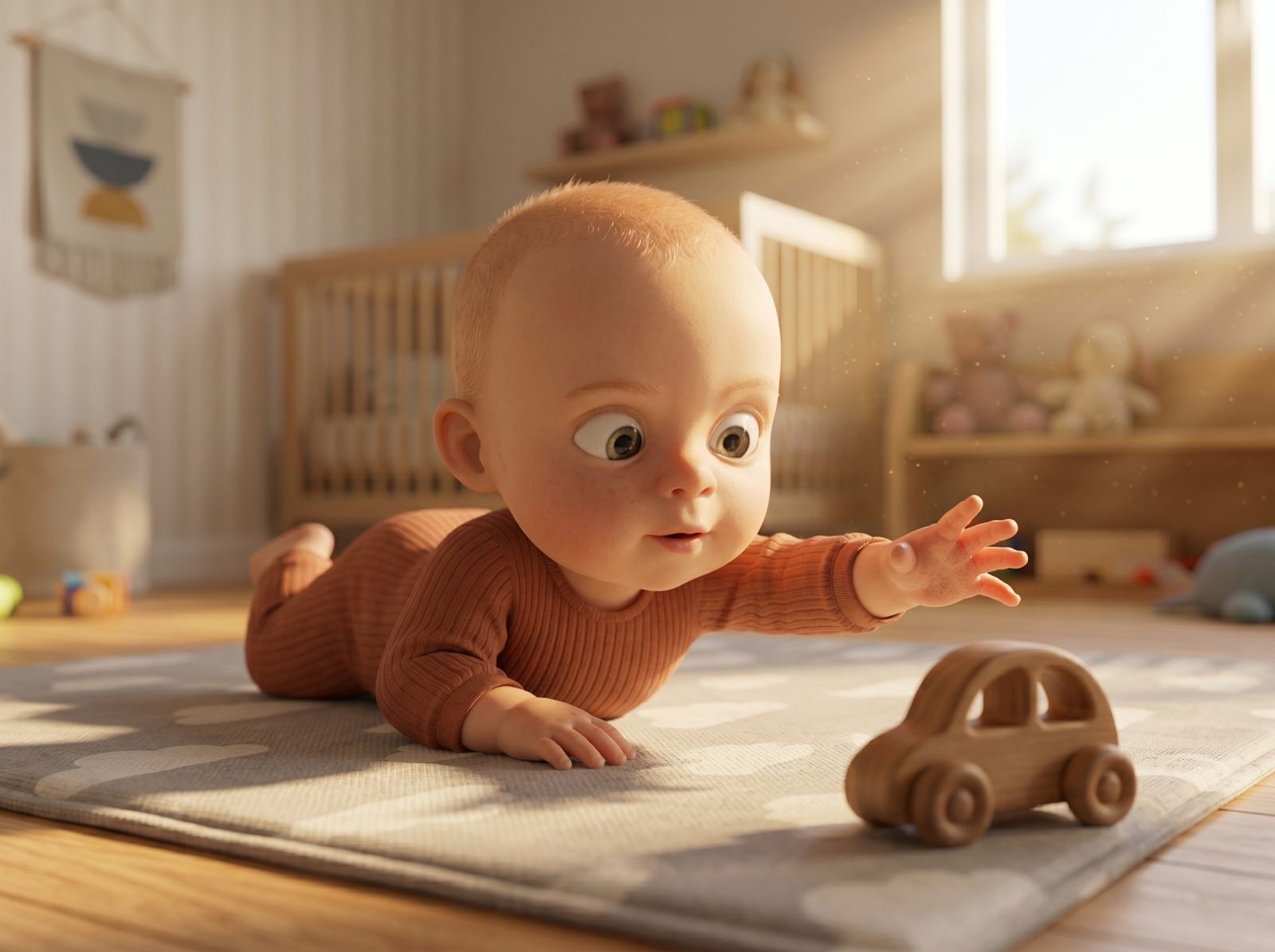
Reaches to grab wanted toy
Typical Timing & Development Window
Visual Timeline & Milestone Benchmarks
What these numbers mean
The average age babies first begin showing early signs of this skill. Before this, it's simply too early — there's nothing to worry about.
The midpoint age: half of babies have reached this milestone by here, half a little later. It's a typical target, not a deadline.
How spread out the timing is. About two-thirds of babies achieve it within one standard deviation of the median (the shaded band, wk 14–18). Wide bands mean a normal range of variation.
A gentle check-in point. If your baby hasn't shown this by around here, it can be worth mentioning to your pediatrician — most often it's still perfectly fine, just later.
About this milestone
The infant purposefully extends their arm and opens their hand to grab a toy they see nearby. This milestone represents a major leap in visual-motor integration, spatial perception, and muscle control. It is the foundation for intentional, goal-directed play.
- 1. Hold an attractive toy a few inches in front of the infant, encouraging them to reach out and pull it from your hand.
- 2. During tummy time, place toys just a few inches beyond the infant's hands, prompting them to reach forward.
- 3. Use toys with multiple textures (e.g., crinkly paper, rubber, fabric) to stimulate tactile curiosity and reach-to-grab attempts.
- 4. Sit with the infant on your lap, holding a toy in front of them, and guide their hand gently to touch and grab it.
- 1. Avoid placing sharp or small items in reachable locations during reach-and-grab practice.