
Nutrition
Transition to Family Meals
Typical Timing & Development Window
Starts
43
wk avg
Median
52
wk
Std dev
±4
wk
Flag
60
wk
Visual Timeline & Milestone Benchmarks
Typical range (68% of babies)
Earliest typical start
Median milestone age
Pediatrician check-in flag
What these numbers mean
Starts
~wk 43
The average age babies first begin showing early signs of this skill. Before this, it's simply too early — there's nothing to worry about.
Median
wk 52
The midpoint age: half of babies have reached this milestone by here, half a little later. It's a typical target, not a deadline.
Std dev
±4 wk
How spread out the timing is. About two-thirds of babies achieve it within one standard deviation of the median (the shaded band, wk 48–56). Wide bands mean a normal range of variation.
Flag
wk 60
A gentle check-in point. If your baby hasn't shown this by around here, it can be worth mentioning to your pediatrician — most often it's still perfectly fine, just later.
About this milestone
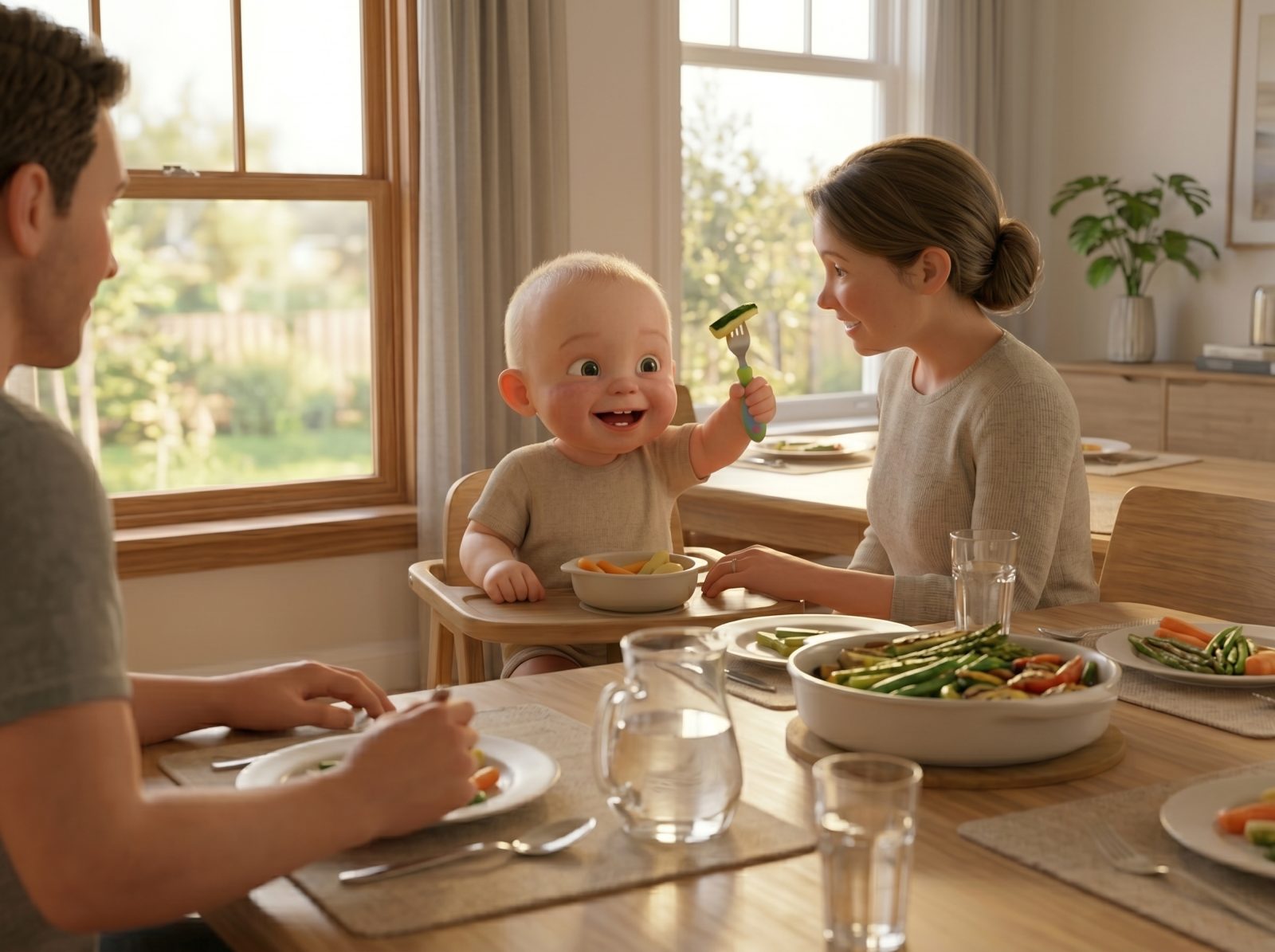
Transition the child to soft, modified family foods, aligning meal times with the family and encouraging self-feeding.
What to try & how to support
- 1. Offer small, soft portions of the family meal before any salt, sugar, or hot spices are added.
- 2. Encourage the child to use their hands, a spoon, or a baby-safe fork to feed themselves.
- 3. Eat together at the table, creating a calm, screen-free, and positive social environment.
What to avoid & gentle reminders
- 1. Avoid giving honey during the first year of life due to the risk of infant botulism.
- 2. Avoid highly processed foods, excess salt, refined sugar, and whole nuts or hard raw vegetables.