
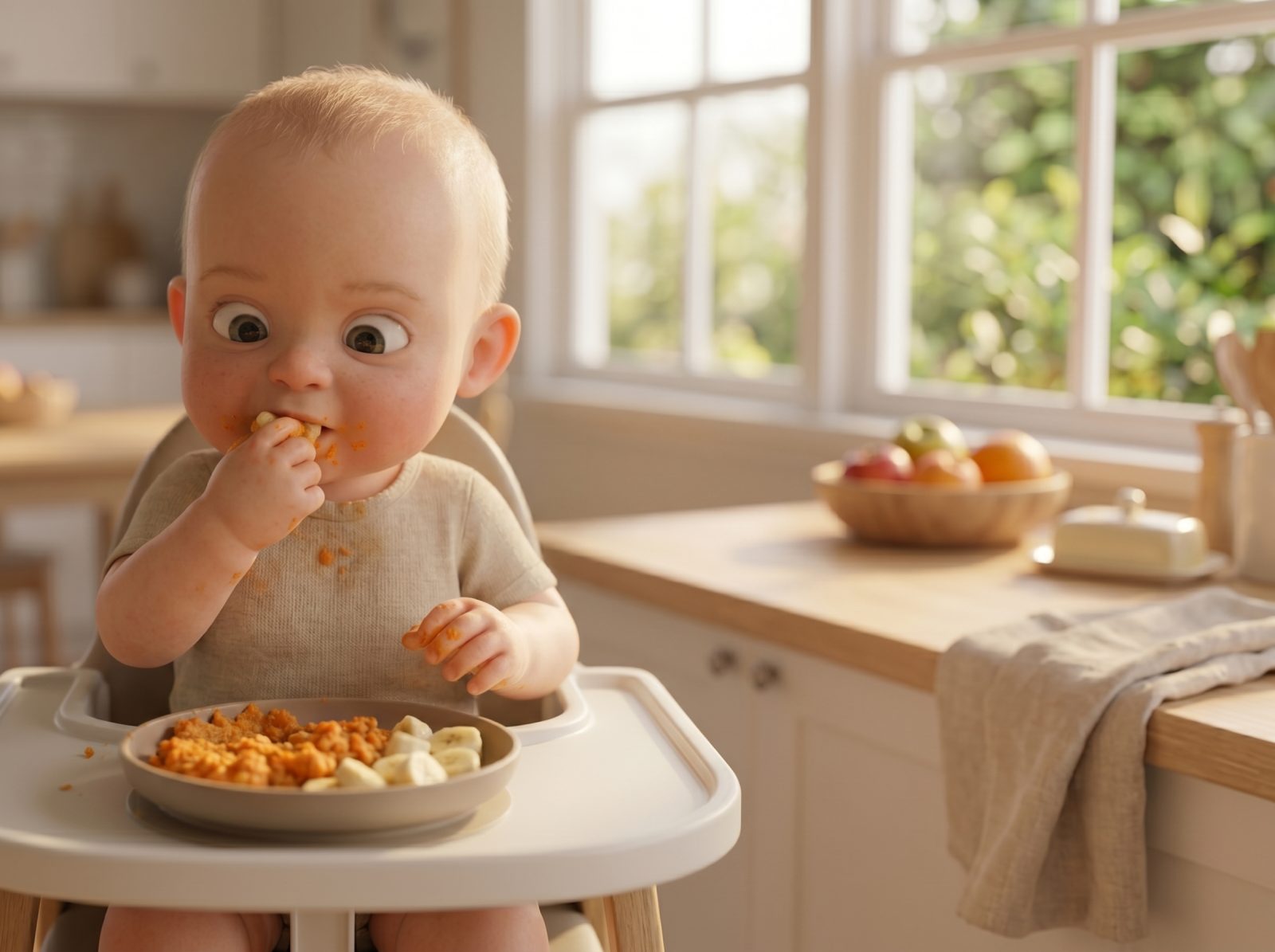
Transition to Coarse and Mashed Textures
Typical Timing & Development Window
Visual Timeline & Milestone Benchmarks
What these numbers mean
The average age babies first begin showing early signs of this skill. Before this, it's simply too early — there's nothing to worry about.
The midpoint age: half of babies have reached this milestone by here, half a little later. It's a typical target, not a deadline.
How spread out the timing is. About two-thirds of babies achieve it within one standard deviation of the median (the shaded band, wk 44–50). Wide bands mean a normal range of variation.
A gentle check-in point. If your baby hasn't shown this by around here, it can be worth mentioning to your pediatrician — most often it's still perfectly fine, just later.
About this milestone
Shift the infant's diet from smooth purées to coarser, mashed foods with soft pieces to help stimulate chewing and support jaw muscle development.
- 1. Use a fork to mash cooked vegetables and potatoes instead of blending them completely smooth.
- 2. Offer soft, small pieces of banana, avocado, or cooked potato for the infant to pick up.
- 3. Encourage the infant to chew soft textures, even if they do not yet have molar teeth.
- 1. Avoid panicking or ending meals during minor gagging events; gagging is a normal, protective reflex as they learn to navigate textures.
- 2. Do not offer firm, round shapes like raw carrots or whole grapes that cannot be easily crushed by the gums alone.
- 3. Avoid reverting permanently to completely smooth purees out of fear if the infant spits out early textured attempts.