
Self-Care
Visual Focus & Tracking Game
Typical Timing & Development Window
Starts
4
wk avg
Median
13
wk
Std dev
±2
wk
Flag
17
wk
Visual Timeline & Milestone Benchmarks
Typical range (68% of babies)
Earliest typical start
Median milestone age
Pediatrician check-in flag
What these numbers mean
Starts
~wk 4
The average age babies first begin showing early signs of this skill. Before this, it's simply too early — there's nothing to worry about.
Median
wk 13
The midpoint age: half of babies have reached this milestone by here, half a little later. It's a typical target, not a deadline.
Std dev
±2 wk
How spread out the timing is. About two-thirds of babies achieve it within one standard deviation of the median (the shaded band, wk 11–15). Wide bands mean a normal range of variation.
Flag
wk 17
A gentle check-in point. If your baby hasn't shown this by around here, it can be worth mentioning to your pediatrician — most often it's still perfectly fine, just later.
About this milestone
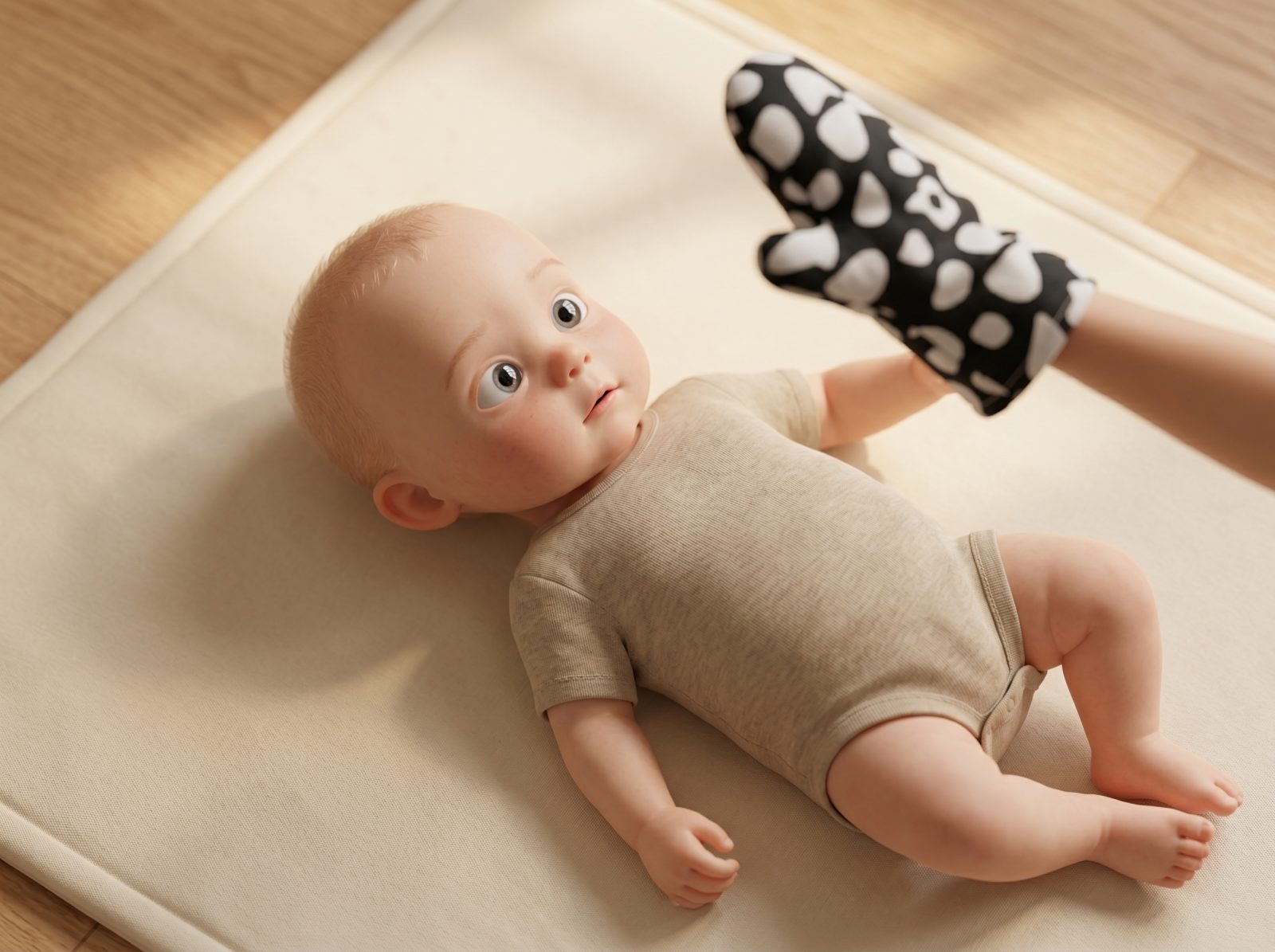
Playfully support early visual focus, tracking, and cognitive attention through simple offline interactions.
What to try & how to support
- 1. Use simple high-contrast hand puppets or patterned soft blocks to play slow tracking games across their field of vision.
- 2. Engage in gentle peek-a-boo variations using your hands or a thin muslin cloth to support cognitive tracking and focus.
- 3. Ensure the active play area is free of competing visual distractions, allowing the infant to focus on a single object.
What to avoid & gentle reminders
- 1. Avoid using bright, flashing electronic toys or screen media, which disrupt natural visual tracking and cause eye fatigue.
- 2. Avoid forcing interactions if the infant signals overstimulation by arching their back or turning their head away.
- 3. Do not move toys rapidly or close to the face, as this triggers the blink reflex instead of helpful tracking patterns.