
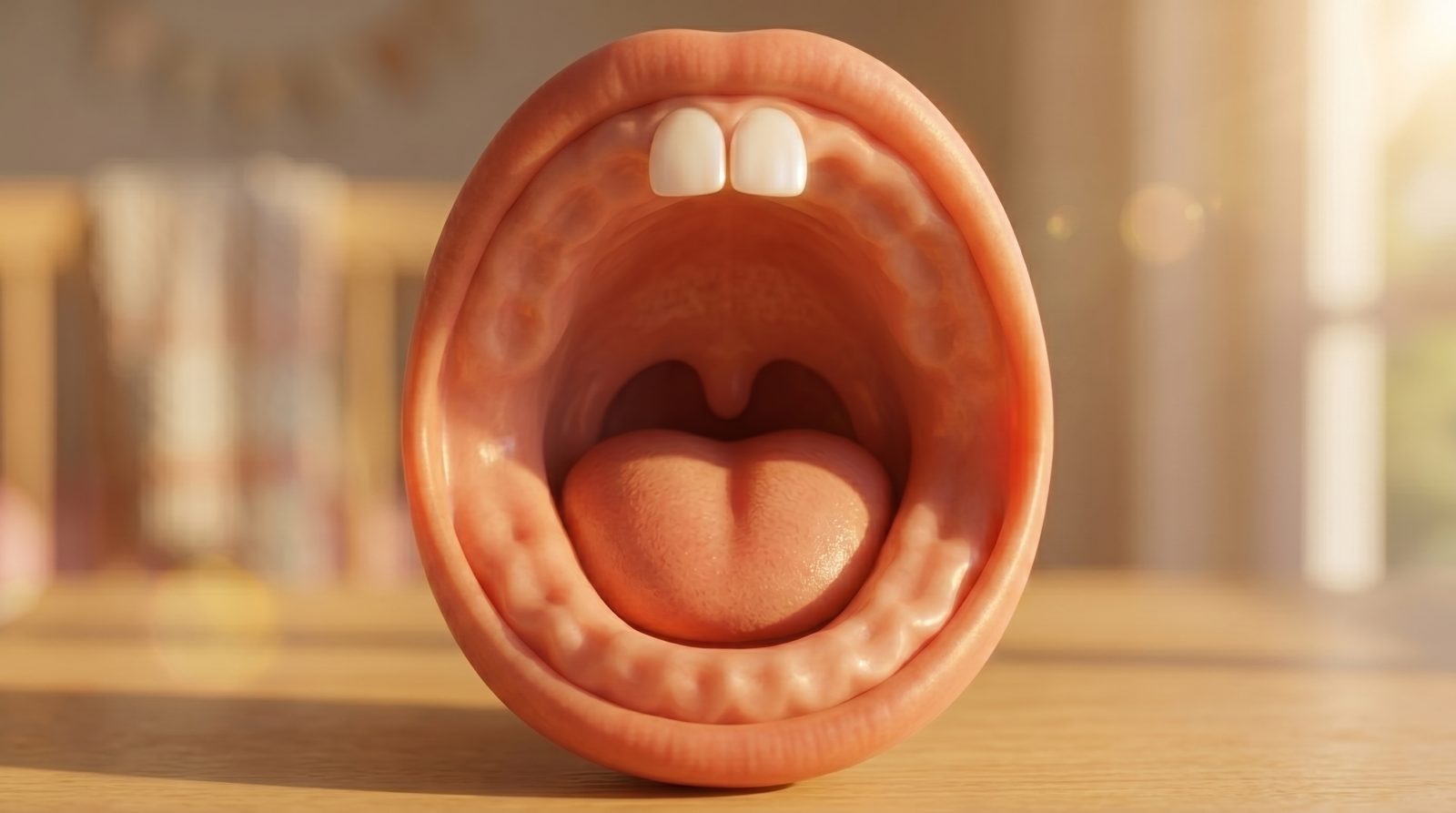
Upper Central Incisors Eruption
Typical Timing & Development Window
Visual Timeline & Milestone Benchmarks
What these numbers mean
The average age babies first begin showing early signs of this skill. Before this, it's simply too early — there's nothing to worry about.
The midpoint age: half of babies have reached this milestone by here, half a little later. It's a typical target, not a deadline.
How spread out the timing is. About two-thirds of babies achieve it within one standard deviation of the median (the shaded band, wk 39–47). Wide bands mean a normal range of variation.
A gentle check-in point. If your baby hasn't shown this by around here, it can be worth mentioning to your pediatrician — most often it's still perfectly fine, just later.
About this milestone
The upper central incisors erupt through the top gums, providing central biting capabilities and enabling the baby to bite and cut soft foods.
- 1. Continue to brush all erupted top and bottom teeth twice daily with a rice-grain amount of fluoride toothpaste.
- 2. Offer cold, soft foods (like unsweetened apple purée) to help soothe the top gum line.
- 3. Keep a soft, clean cloth nearby to wipe away heavy drool and keep your baby's face dry.
- 1. Avoid using hard, sharp, or brittle plastic toys for teething, as they can scratch emerging enamel surfaces.
- 2. Avoid over-the-counter teething gels containing benzocaine or lidocaine due to associated medical safety warnings.
- 3. Do not skip daily brushing sessions if the infant is fussy; prioritize shorter, gentler sweeps instead.
Connected Development Leap
The World of Categories
Peaks around week 37Sorting objects, sounds and situations into groups — the groundwork for language. They notice that all dogs bark, all bowls hold food, all hands have fingers.