
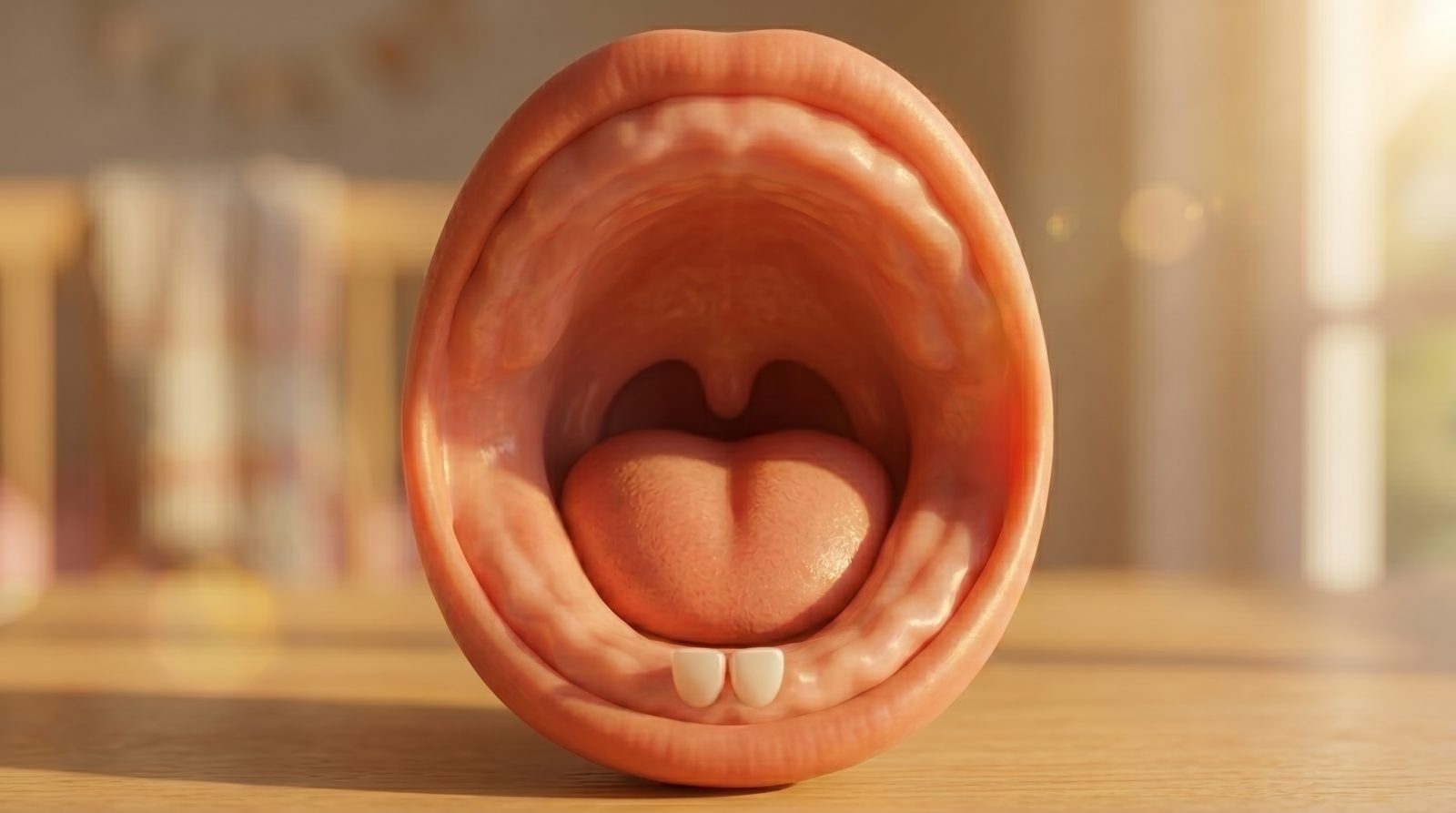
Lower Central Incisors Eruption
Typical Timing & Development Window
Visual Timeline & Milestone Benchmarks
What these numbers mean
The average age babies first begin showing early signs of this skill. Before this, it's simply too early — there's nothing to worry about.
The midpoint age: half of babies have reached this milestone by here, half a little later. It's a typical target, not a deadline.
How spread out the timing is. About two-thirds of babies achieve it within one standard deviation of the median (the shaded band, wk 30–38). Wide bands mean a normal range of variation.
A gentle check-in point. If your baby hasn't shown this by around here, it can be worth mentioning to your pediatrician — most often it's still perfectly fine, just later.
About this milestone
The first primary teeth (lower central incisors) erupt through the bottom gums. This marks the physical start of teething, which supports the transition to textured foods and early speech mechanics.
- 1. Provide texture-ridged silicone teething rings chilled in the refrigerator to soothe swollen bottom gums.
- 2. Gently massage your baby's gums using a clean finger or a soft, damp cloth to relieve internal eruption pressure.
- 3. Clean away heavy pooling drool from your baby's chin and neck frequently to prevent skin irritation and drool rashes.
- 1. Never freeze teething rings solid, as extreme cold can freeze and damage fragile infant gum tissues.
- 2. Avoid using amber teething necklaces, as they present a severe choking and strangulation hazard.