First Brushing & First Dental Visit
Typical Timing & Development Window
Visual Timeline & Milestone Benchmarks
What these numbers mean
The average age babies first begin showing early signs of this skill. Before this, it's simply too early — there's nothing to worry about.
The midpoint age: half of babies have reached this milestone by here, half a little later. It's a typical target, not a deadline.
How spread out the timing is. About two-thirds of babies achieve it within one standard deviation of the median (the shaded band, wk 31–37). Wide bands mean a normal range of variation.
A gentle check-in point. If your baby hasn't shown this by around here, it can be worth mentioning to your pediatrician — most often it's still perfectly fine, just later.
About this milestone
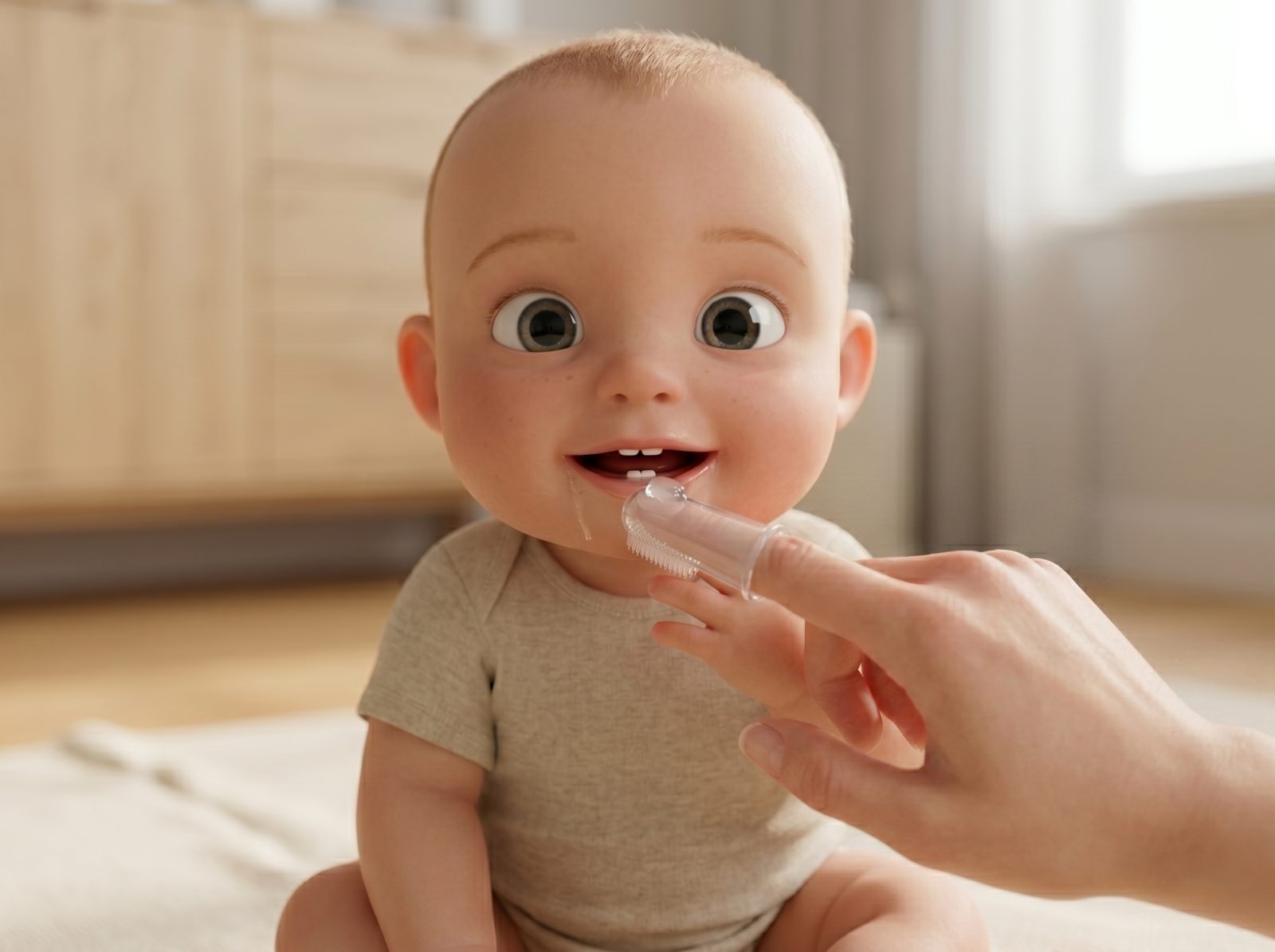
Initiate twice-daily brushing as soon as the first tooth erupts, and book the preventative dental screening at the dentist's office to monitor early oral health.
- 1. Use a soft, small-headed infant toothbrush with a tiny, rice-grain-sized smear of fluoride toothpaste twice daily.
- 2. Make brushing a playful social game by singing a dedicated song or letting your baby watch your own tooth brushing routine.
- 3. Schedule the child's first preventative dental checkup within six months of the first tooth's eruption or by their first birthday.
- 1. Avoid letting the child sleep with a bottle containing milk, juice, or sweetened liquids, which can coat new teeth and cause decay.
- 2. Avoid using forceful, high-pressure brushing techniques that can hurt sensitive gums and make your baby fear oral care.
- 3. Do not use adult-strength or non-fluoride toothpastes unless explicitly directed by a qualified healthcare professional.
Connected Development Leap
The World of Categories
Peaks around week 37Sorting objects, sounds and situations into groups — the groundwork for language. They notice that all dogs bark, all bowls hold food, all hands have fingers.