
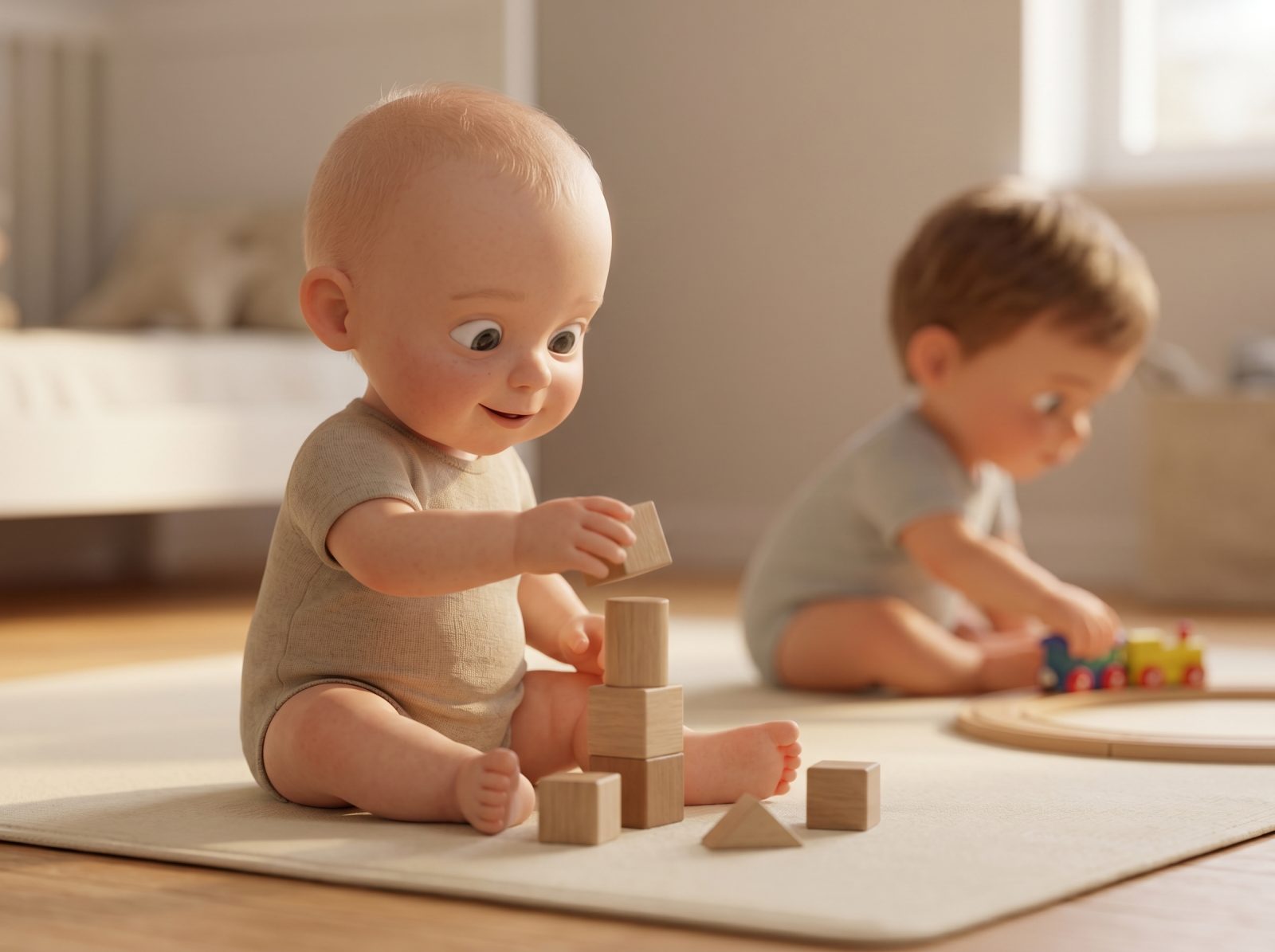
Engages in parallel play mechanics
Typical Timing & Development Window
Visual Timeline & Milestone Benchmarks
What these numbers mean
The average age babies first begin showing early signs of this skill. Before this, it's simply too early — there's nothing to worry about.
The midpoint age: half of babies have reached this milestone by here, half a little later. It's a typical target, not a deadline.
How spread out the timing is. About two-thirds of babies achieve it within one standard deviation of the median (the shaded band, wk 88–104). Wide bands mean a normal range of variation.
A gentle check-in point. If your baby hasn't shown this by around here, it can be worth mentioning to your pediatrician — most often it's still perfectly fine, just later.
About this milestone
The toddler actively plays immediately adjacent to or alongside peers, mirroring their choices, actions, and toys, but does not yet attempt to merge play goals or cooperate directly.
- 1. Arrange unstructured play opportunities with peers where multiple identical or similar toys are freely available.
- 2. Sit nearby to give a safe, supportive framework while letting the children explore adjacent space at their own pace.
- 3. Describe their actions positively to build social connection tracks ('You are building a tower right next to Leo!').
- 1. Avoid forcing direct cooperative sharing, turn-taking, or coordinated rules, which are developmentally premature at this age.
- 2. Do not intervene immediately unless safety boundaries are crossed; allow them to observe and learn from each other's proximity.