
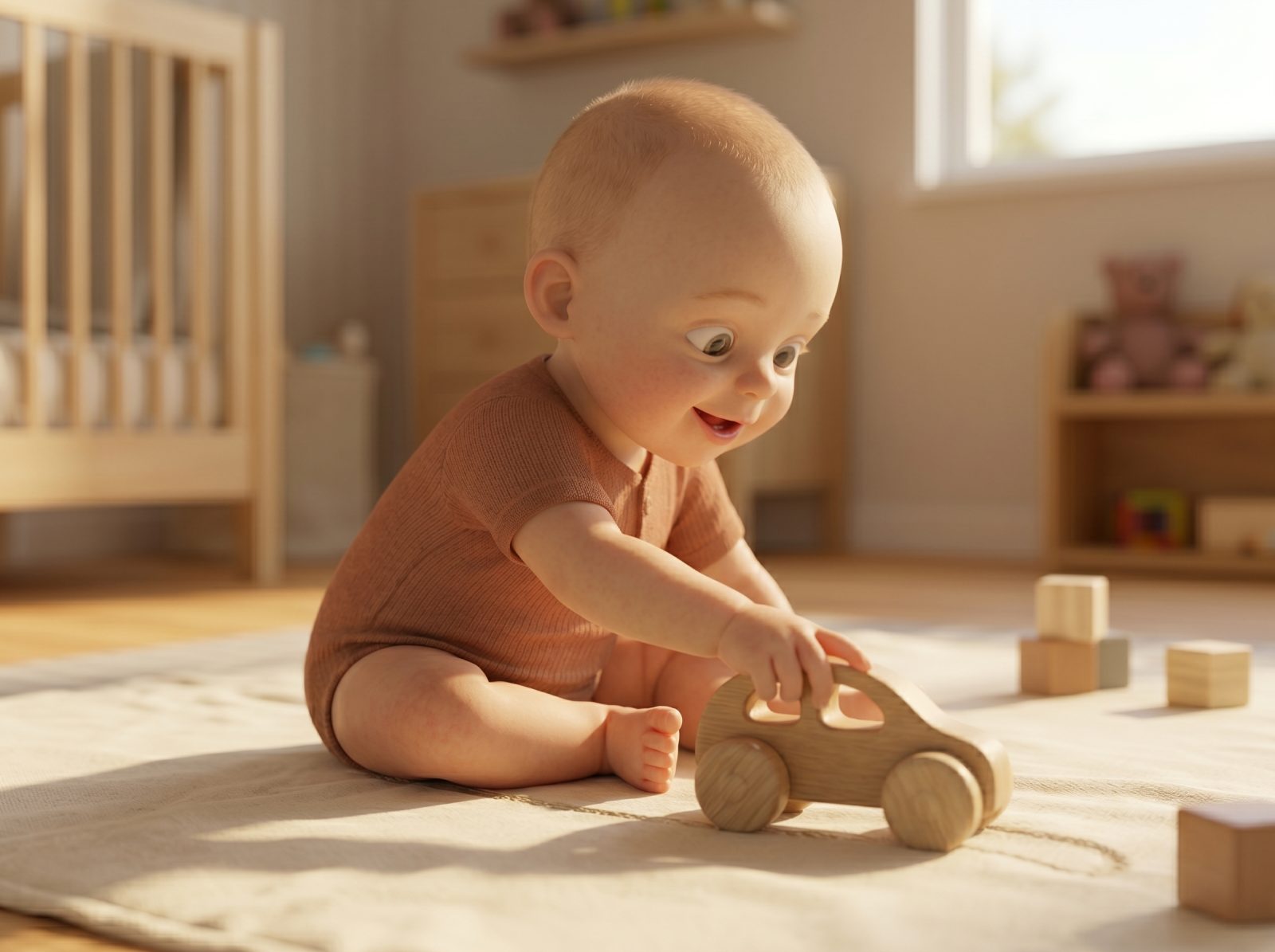
Plays with toys simply
Typical Timing & Development Window
Visual Timeline & Milestone Benchmarks
What these numbers mean
The average age babies first begin showing early signs of this skill. Before this, it's simply too early — there's nothing to worry about.
The midpoint age: half of babies have reached this milestone by here, half a little later. It's a typical target, not a deadline.
How spread out the timing is. About two-thirds of babies achieve it within one standard deviation of the median (the shaded band, wk 60–68). Wide bands mean a normal range of variation.
A gentle check-in point. If your baby hasn't shown this by around here, it can be worth mentioning to your pediatrician — most often it's still perfectly fine, just later.
About this milestone
The toddler plays with toys in a simple, functional way, such as pushing a toy car forward or rolling a ball. This indicates stable cause-and-effect understanding and intentional, goal-directed play. It shows they are beginning to understand how physical objects move and interact in space.
- 1. Provide simple, durable toys like wooden cars, trains, or large balls that are easy to push and roll.
- 2. Sit on the floor and demonstrate how to push a car along a flat path, making fun motor sounds ('Vroom!').
- 3. Build simple cardboard ramps, showing them how toys roll down and slide across the floor.
- 4. Encourage active, back-and-forth rolling play with a large, soft ball to build physical coordination.
- 1. Avoid electronic toys with loud, startling noises that can inhibit calm, focused play.