
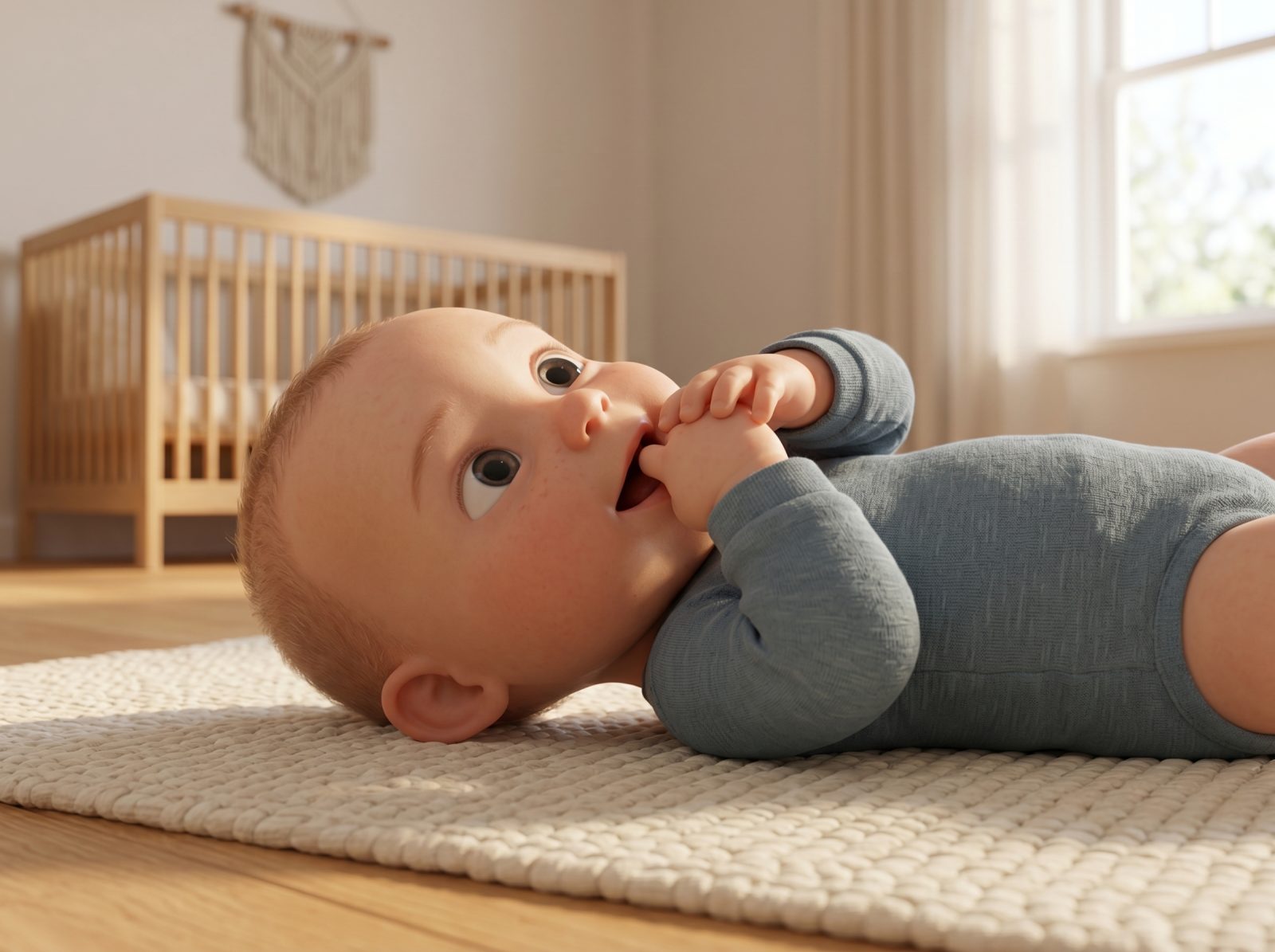
Brings hands to mouth
Typical Timing & Development Window
Visual Timeline & Milestone Benchmarks
What these numbers mean
The average age babies first begin showing early signs of this skill. Before this, it's simply too early — there's nothing to worry about.
The midpoint age: half of babies have reached this milestone by here, half a little later. It's a typical target, not a deadline.
How spread out the timing is. About two-thirds of babies achieve it within one standard deviation of the median (the shaded band, wk 13–17). Wide bands mean a normal range of variation.
A gentle check-in point. If your baby hasn't shown this by around here, it can be worth mentioning to your pediatrician — most often it's still perfectly fine, just later.
About this milestone
The infant coordinates their arms and hands to bring their fingers, thumbs, or toys directly to their mouth. This is a critical self-soothing mechanism, an early step in motor planning, and a primary method of oral sensory exploration. It marks the transition from random arm movements to purposeful coordination.
- 1. Keep the infant's hands bare and clean, allowing them to suck on their fingers and explore their mouth freely.
- 2. Place soft, washable teething rings or clean washcloths in the infant's hand, guiding them toward their mouth.
- 3. Play hand-clapping games, gently moving the infant's hands together and then up to touch their chin or lips.
- 4. Keep the infant's fingernails trimmed short to prevent them from scratching their face during oral exploration.
- 1. Avoid forcing hands toward the mouth or restricting natural hand-to-mouth exploration unnecessarily.