
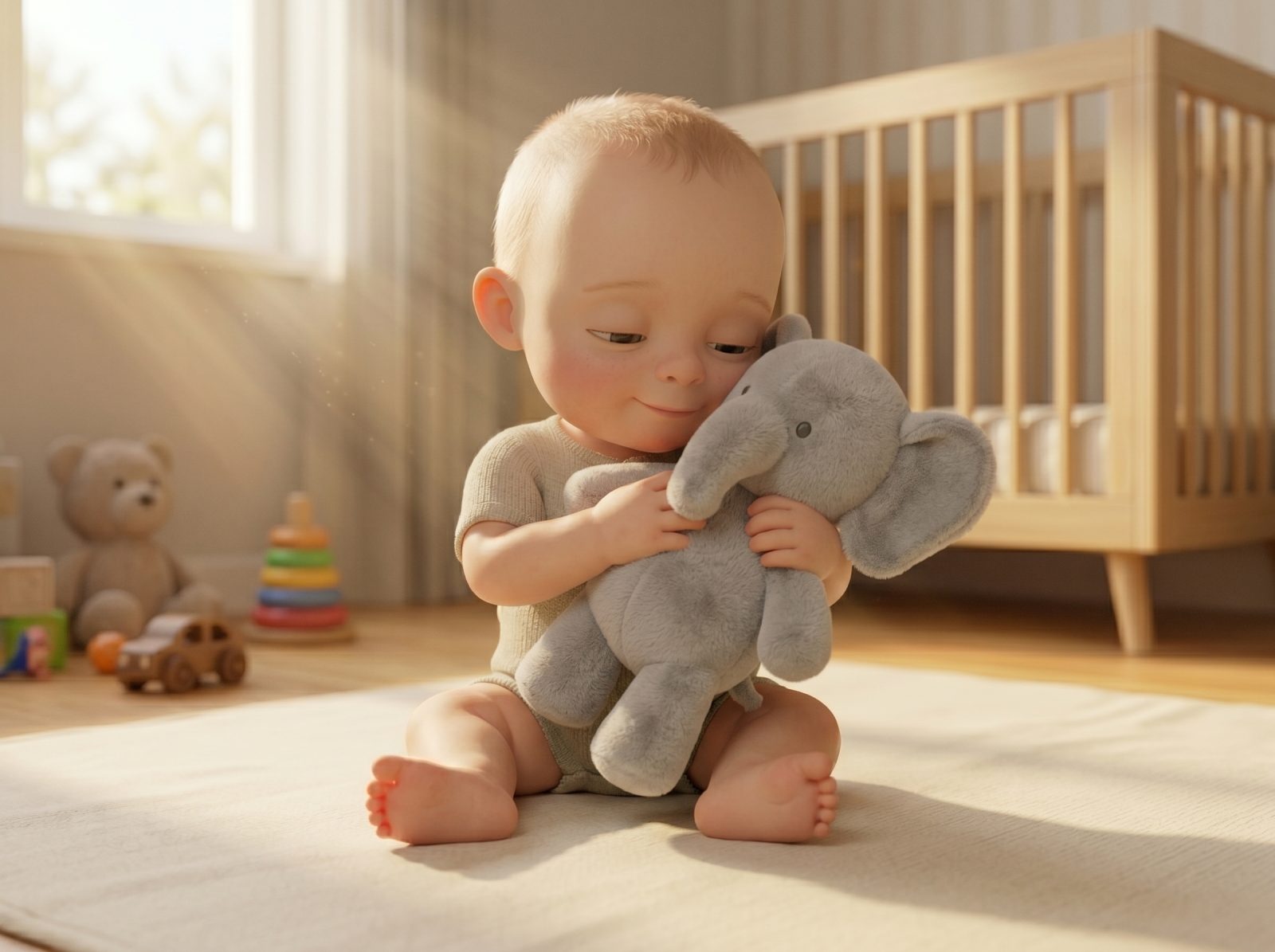
Adopts a transitional object for self-soothing
Typical Timing & Development Window
Visual Timeline & Milestone Benchmarks
What these numbers mean
The average age babies first begin showing early signs of this skill. Before this, it's simply too early — there's nothing to worry about.
The midpoint age: half of babies have reached this milestone by here, half a little later. It's a typical target, not a deadline.
How spread out the timing is. About two-thirds of babies achieve it within one standard deviation of the median (the shaded band, wk 39–49). Wide bands mean a normal range of variation.
A gentle check-in point. If your baby hasn't shown this by around here, it can be worth mentioning to your pediatrician — most often it's still perfectly fine, just later.
About this milestone
The infant or toddler chooses a specific blanket, soft toy, or lovey, forming a distinct emotional attachment to it. They use this item as a secure psychological proxy for their parents to independently regulate their anxiety during sleep or stress.
- 1. Introduce a safe, small, breathable blanket or soft toy during comforting routines like nursing, rocking, or book reading.
- 2. Keep the chosen object accessible during stressful transitions like car rides, daycare drop-offs, or bedtime windows.
- 3. Buy a duplicate backup of the identical item early on in case the original lovey is lost or needs washing.
- 1. Never use loose plush blankets or heavy soft items in a crib before 12 months of age due to standard safe sleep guidelines.
- 2. Avoid using the threat of taking away their transitional object as a form of behavioral discipline or punishment.