
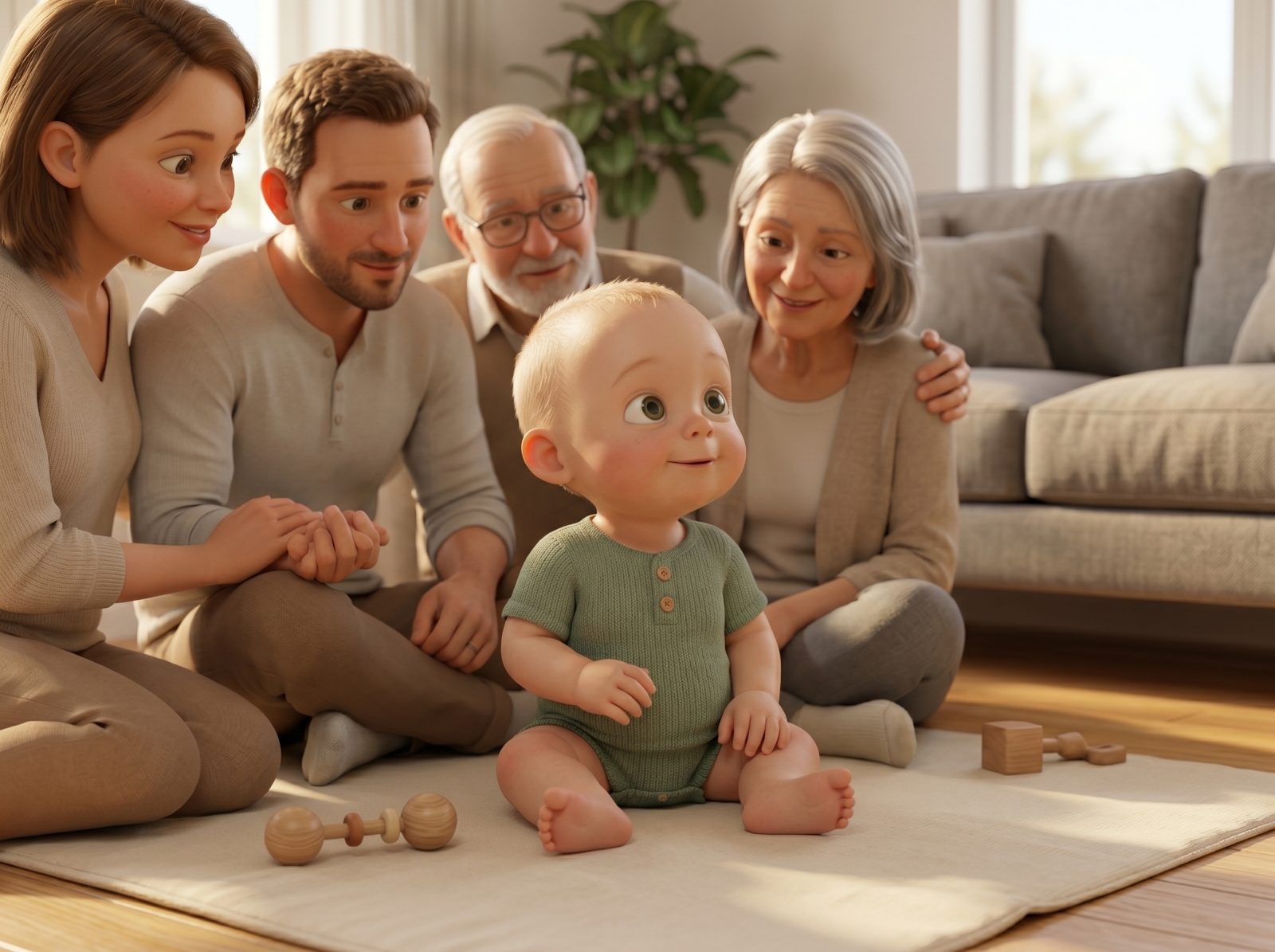
Knows familiar people
Typical Timing & Development Window
Visual Timeline & Milestone Benchmarks
What these numbers mean
The average age babies first begin showing early signs of this skill. Before this, it's simply too early — there's nothing to worry about.
The midpoint age: half of babies have reached this milestone by here, half a little later. It's a typical target, not a deadline.
How spread out the timing is. About two-thirds of babies achieve it within one standard deviation of the median (the shaded band, wk 21–27). Wide bands mean a normal range of variation.
A gentle check-in point. If your baby hasn't shown this by around here, it can be worth mentioning to your pediatrician — most often it's still perfectly fine, just later.
About this milestone
The infant displays clear signs of recognition (such as smiling, kicking their legs, or cooing) when a familiar caregiver approaches. This indicates stable long-term visual and auditory memory, and the development of selective attachment. It shows they can distinguish between primary caregivers and strangers.
- 1. Encourage other close family members to interact with the infant regularly using consistent, gentle routines.
- 2. Look at family photo albums together, pointing to pictures of familiar faces and saying their names clearly.
- 3. Play gentle peekaboo games to help them practice recognizing your face as it appears and disappears.
- 1. Avoid pushing the infant into the arms of strangers if they show signs of hesitation, clinginess, or fear.
- 2. Do not worry if the infant displays early stranger anxiety; this is a normal, healthy indicator of selective attachment.
- 3. Avoid sudden, loud approaches from people they do not know well, which can startle and upset them.