
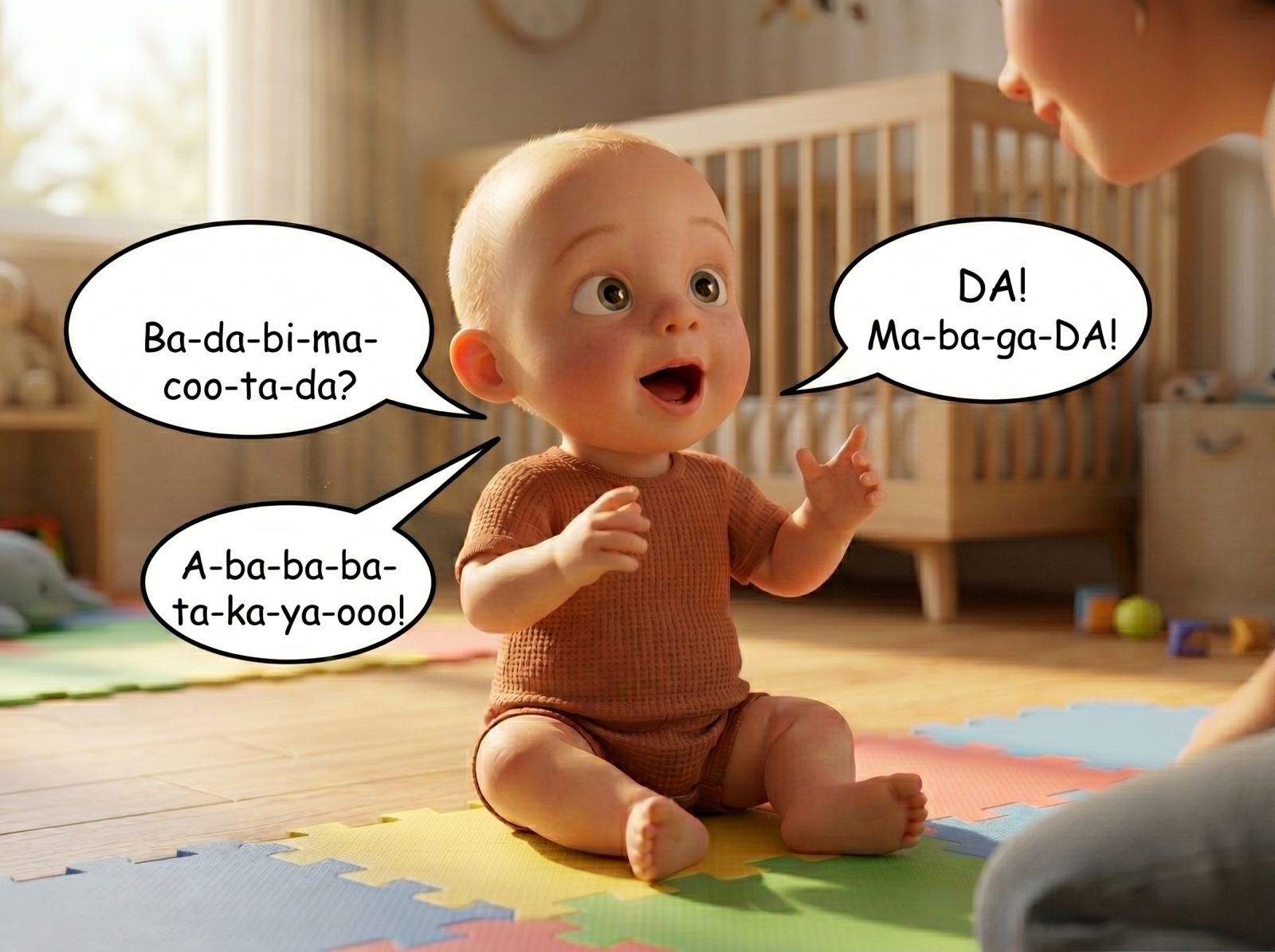
Vocalizes fluent conversational jargon
Typical Timing & Development Window
Visual Timeline & Milestone Benchmarks
What these numbers mean
The average age babies first begin showing early signs of this skill. Before this, it's simply too early — there's nothing to worry about.
The midpoint age: half of babies have reached this milestone by here, half a little later. It's a typical target, not a deadline.
How spread out the timing is. About two-thirds of babies achieve it within one standard deviation of the median (the shaded band, wk 56–64). Wide bands mean a normal range of variation.
A gentle check-in point. If your baby hasn't shown this by around here, it can be worth mentioning to your pediatrician — most often it's still perfectly fine, just later.
About this milestone
The toddler produces long strings of varied consonant-vowel combinations delivered with adult-like inflection, rhythm, and conversational cadence. Though it contains no real words, it demonstrates a mature grasp of speech flow structures.
- 1. Treat their jargon strings as real speech; reply enthusiastically ('Oh wow! Really? Tell me more!').
- 2. Pause and maintain eye contact, giving them distinct 'turns' to vocalize their paragraph-like strings.
- 3. Translate parts of their cadence into real words based on context clues ('You are pointing at the car, yes, that is a fast car!').
- 1. Avoid shutting down or ignoring jargon monologues, as this expressive experimentation is the literal blueprint for verbal sentences.
- 2. Do not correct their sounds; simply mirror back clean, natural adult language in response.