
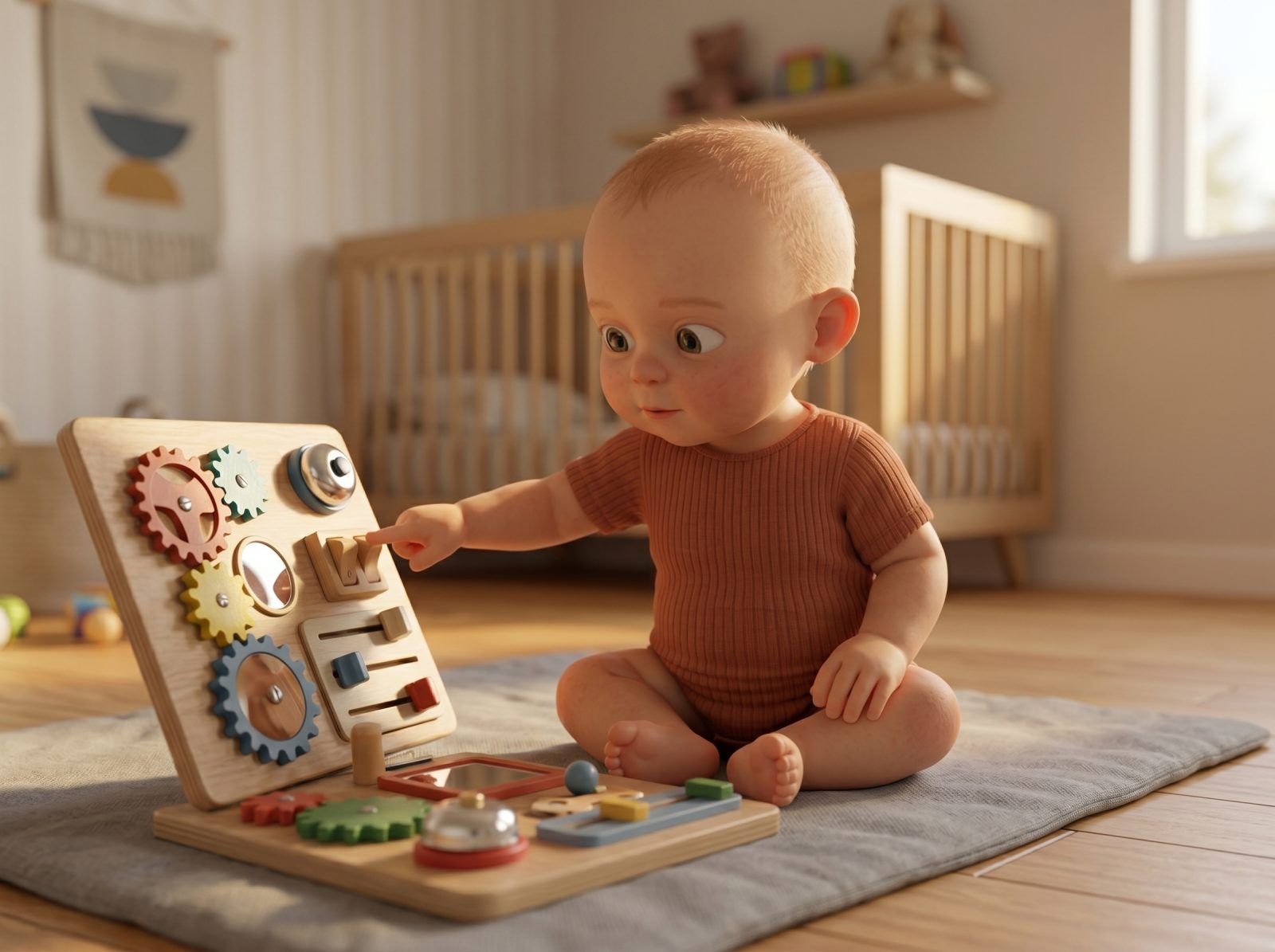
Uses switches and buttons
Typical Timing & Development Window
Visual Timeline & Milestone Benchmarks
What these numbers mean
The average age babies first begin showing early signs of this skill. Before this, it's simply too early — there's nothing to worry about.
The midpoint age: half of babies have reached this milestone by here, half a little later. It's a typical target, not a deadline.
How spread out the timing is. About two-thirds of babies achieve it within one standard deviation of the median (the shaded band, wk 91–101). Wide bands mean a normal range of variation.
A gentle check-in point. If your baby hasn't shown this by around here, it can be worth mentioning to your pediatrician — most often it's still perfectly fine, just later.
About this milestone
The toddler actively tries to use switches, dials, buttons, or keys on a toy to make something happen. This activity demonstrates manual exploration, motor planning, and cause-and-effect reasoning. It shows they are persistent in solving physical problems.
- 1. Provide high-quality pop-up toys, busy boards, or activity boxes that have varied mechanical buttons and switches.
- 2. Model how to push a button or flip a switch, pausing to let them see the resulting action ('Look, it popped up!').
- 3. Guide their hand gently to help them push a stiff switch or turn a key, building their finger strength.
- 4. Explore safe household fixtures together, like letting them flip a wall light switch under your supervision.
- 1. Avoid stepping in and doing it for them when they struggle; let them experience trial and error to build problem-solving skills.
- 2. Do not use toys with flimsy mechanical parts that can easily break and cause frustration or safety risks.
- 3. Avoid toys with loud, high-pitched electronic sounds that can startle and overstimulate them.