
Teeth
Upper First Molars Eruption
Typical Timing & Development Window
Starts
52
wk avg
Median
69
wk
Std dev
±6
wk
Flag
81
wk
Visual Timeline & Milestone Benchmarks
Typical range (68% of babies)
Earliest typical start
Median milestone age
Pediatrician check-in flag
What these numbers mean
Starts
~wk 52
The average age babies first begin showing early signs of this skill. Before this, it's simply too early — there's nothing to worry about.
Median
wk 69
The midpoint age: half of babies have reached this milestone by here, half a little later. It's a typical target, not a deadline.
Std dev
±6 wk
How spread out the timing is. About two-thirds of babies achieve it within one standard deviation of the median (the shaded band, wk 63–75). Wide bands mean a normal range of variation.
Flag
wk 81
A gentle check-in point. If your baby hasn't shown this by around here, it can be worth mentioning to your pediatrician — most often it's still perfectly fine, just later.
About this milestone
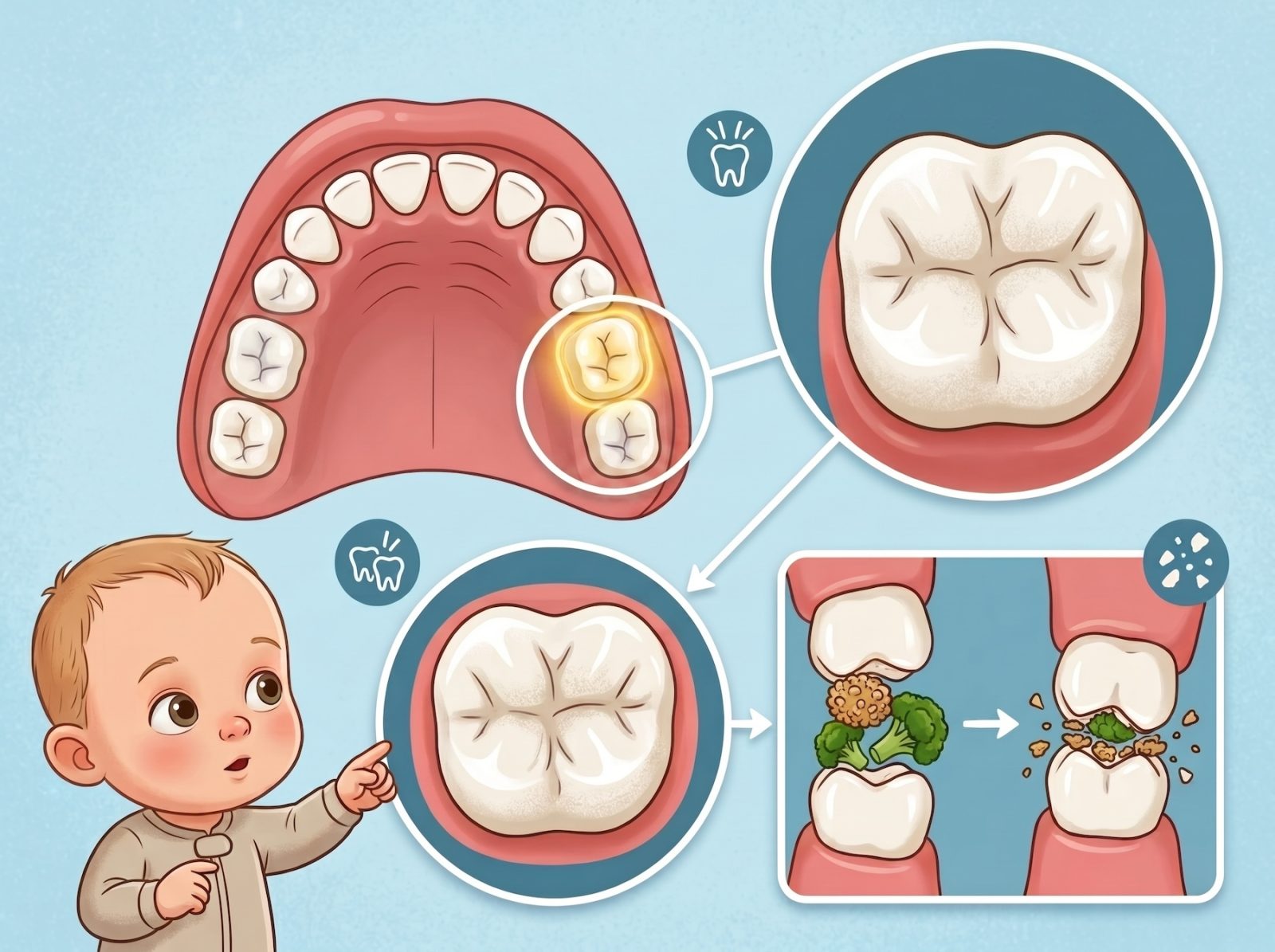
The upper first molars erupt in the back of the mouth, introducing flat chewing surfaces designed for crushing textured foods.
What to try & how to support
- 1. Provide solid silicone or rubber teething items that feature extended stems to reach the back areas of the mouth safely.
- 2. Offer slightly chilled, soft foods like unsweetened oatmeal or yogurt to soothe deep gum pain in the back.
- 3. Carefully brush the flat top crevices of the new back molars to prevent early food and plaque buildup.
What to avoid & gentle reminders
- 1. Avoid using hard or sharp household items to check for molar points, which can scratch tender gum tissues.
- 2. Avoid skipping bedtime brushing because of teething crankiness; consistent routines are key as back teeth emerge.
- 3. Do not offer small, hard choking hazards like raw carrot coins under the assumption that the new molars can grind them.