
Teeth
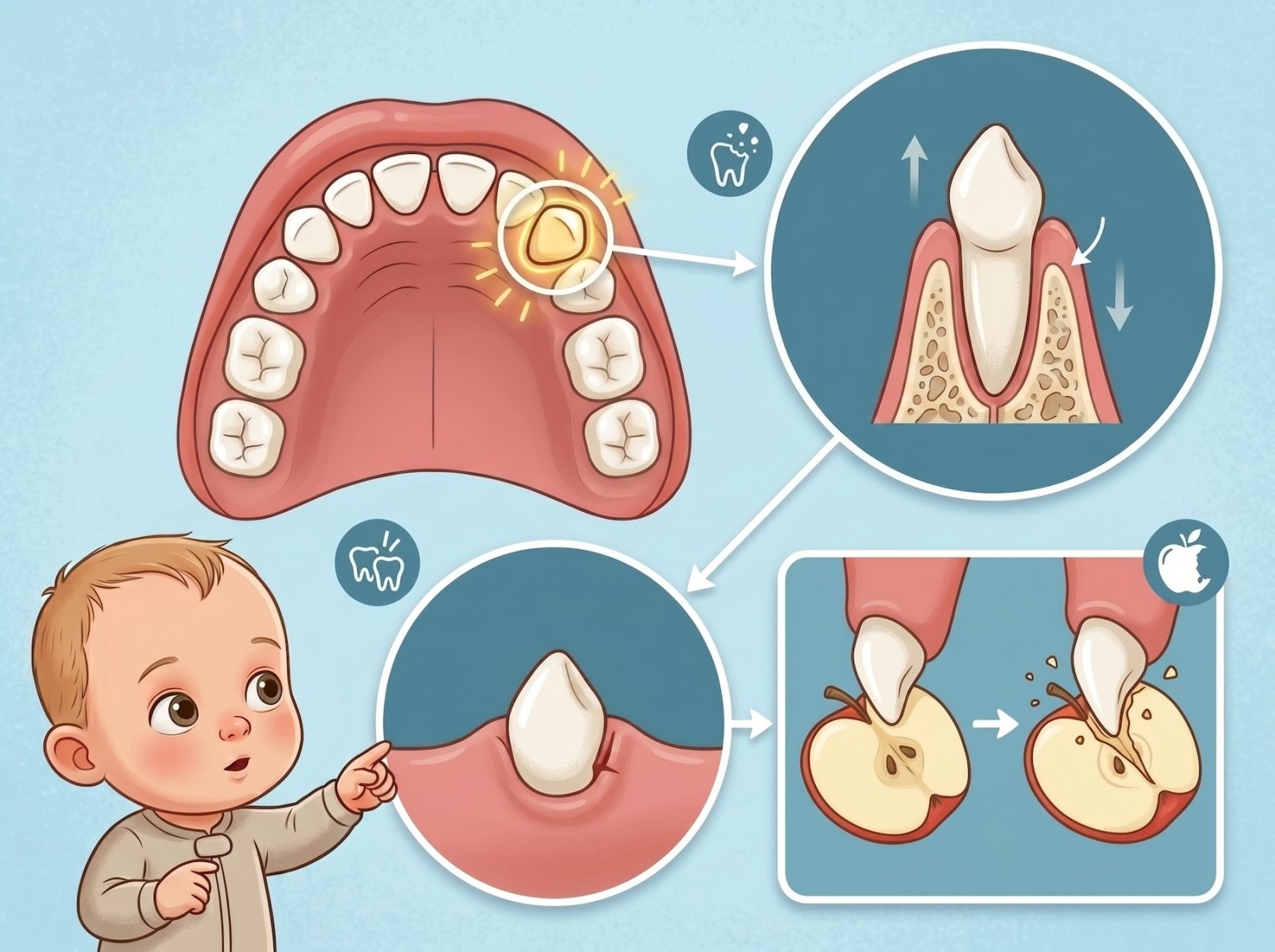
Upper Canines Eruption
Typical Timing & Development Window
Starts
65
wk avg
Median
82
wk
Std dev
±6
wk
Flag
94
wk
Visual Timeline & Milestone Benchmarks
Typical range (68% of babies)
Earliest typical start
Median milestone age
Pediatrician check-in flag
What these numbers mean
Starts
~wk 65
The average age babies first begin showing early signs of this skill. Before this, it's simply too early — there's nothing to worry about.
Median
wk 82
The midpoint age: half of babies have reached this milestone by here, half a little later. It's a typical target, not a deadline.
Std dev
±6 wk
How spread out the timing is. About two-thirds of babies achieve it within one standard deviation of the median (the shaded band, wk 76–88). Wide bands mean a normal range of variation.
Flag
wk 94
A gentle check-in point. If your baby hasn't shown this by around here, it can be worth mentioning to your pediatrician — most often it's still perfectly fine, just later.
About this milestone
The upper canines erupt, filling the gaps between the front incisors and the back molars to support tearing and gripping food.
What to try & how to support
- 1. Keep up a thorough twice-daily brushing routine, focusing on the newly erupted canine teeth.
- 2. Offer a clean, chilled damp washcloth for the child to chew on to help soothe canine gum discomfort.
- 3. Keep brushing fun and positive, letting the toddler 'brush' your teeth or their favorite toy's teeth.
What to avoid & gentle reminders
- 1. Avoid force-feeding if canine pain causes a temporary drop in solid food acceptance; offer frequent smaller meals or milk instead.
- 2. Avoid using toothbrushes with frayed or rough bristles that can scratch the sensitive tissue over erupting canines.
- 3. Do not skip checking the child's mouth periodically, as canine eruption can sometimes cause minor localized swelling.