
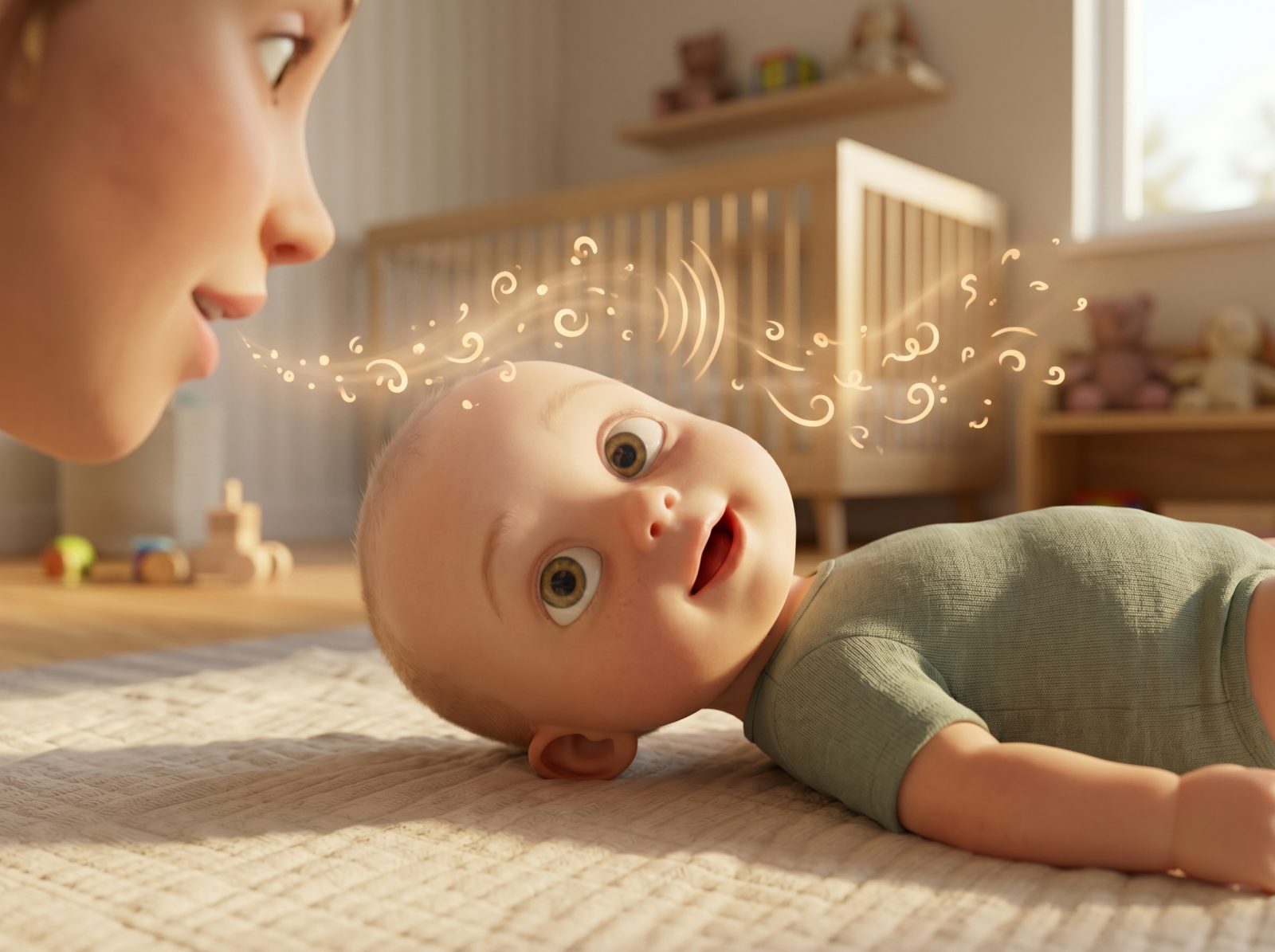
Turns head toward your voice
Typical Timing & Development Window
Visual Timeline & Milestone Benchmarks
What these numbers mean
The average age babies first begin showing early signs of this skill. Before this, it's simply too early — there's nothing to worry about.
The midpoint age: half of babies have reached this milestone by here, half a little later. It's a typical target, not a deadline.
How spread out the timing is. About two-thirds of babies achieve it within one standard deviation of the median (the shaded band, wk 11–17). Wide bands mean a normal range of variation.
A gentle check-in point. If your baby hasn't shown this by around here, it can be worth mentioning to your pediatrician — most often it's still perfectly fine, just later.
About this milestone
The infant shifts their gaze or turns their head toward the sound of a parent's or caregiver's voice. This movement demonstrates auditory localization and a social preference for human speech over environmental noises. It is an early sign of social-auditory connection and selective attention.
- 1. Call the infant's name in a gentle, melodic voice from slightly behind them, pausing to see if they turn toward you.
- 2. Use a high-contrast toy while talking to help the infant connect the auditory voice with a visual object.
- 3. Engage in close-up face-to-face conversations, letting them see your lips move as you speak.
- 1. Avoid shouting loudly from the other side of the room; use gentle voice prompts to test localization.