
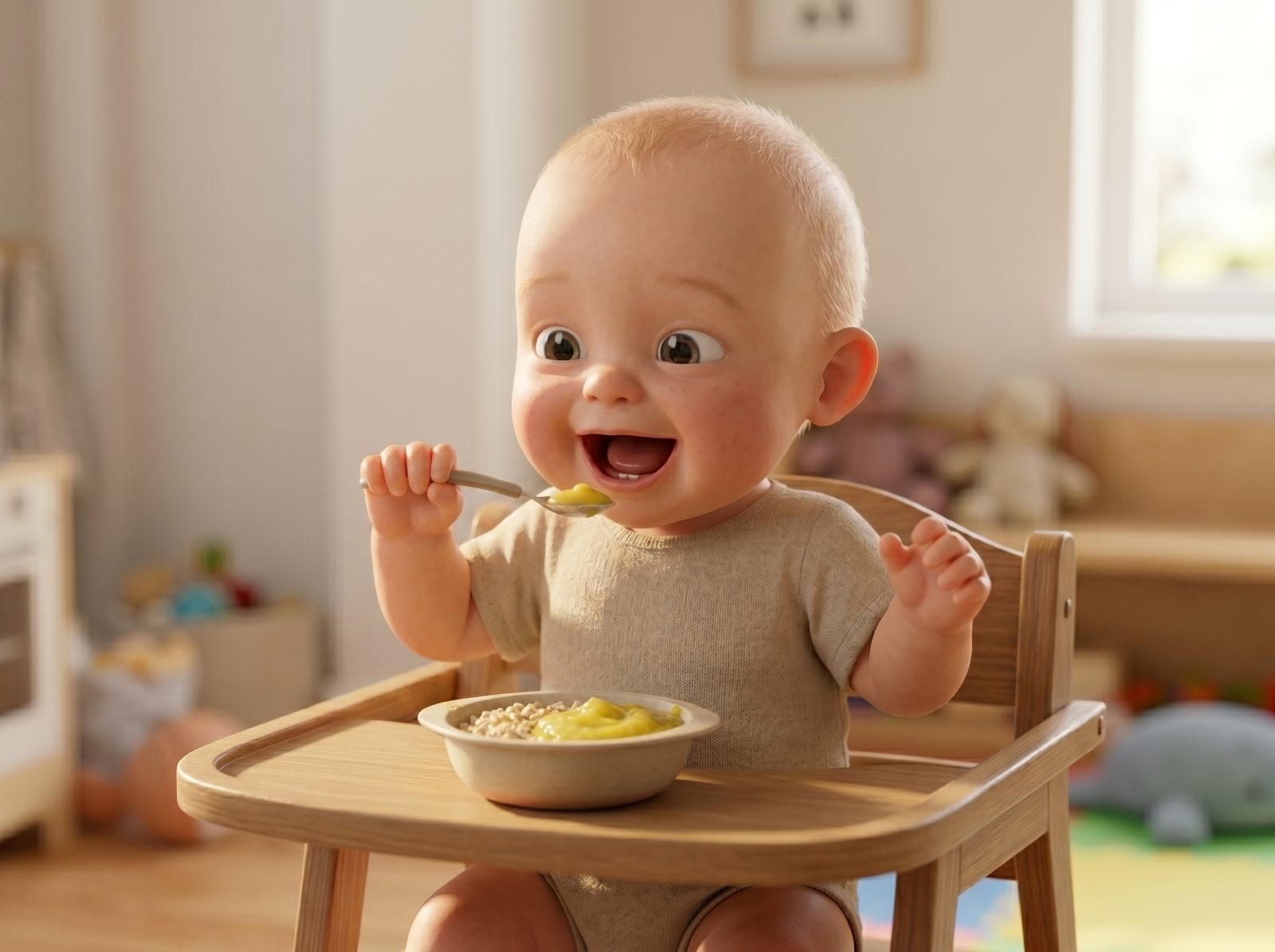
Third Solid Meal: Cereal-Fruit Puree
Typical Timing & Development Window
Visual Timeline & Milestone Benchmarks
What these numbers mean
The average age babies first begin showing early signs of this skill. Before this, it's simply too early — there's nothing to worry about.
The midpoint age: half of babies have reached this milestone by here, half a little later. It's a typical target, not a deadline.
How spread out the timing is. About two-thirds of babies achieve it within one standard deviation of the median (the shaded band, wk 31–39). Wide bands mean a normal range of variation.
A gentle check-in point. If your baby hasn't shown this by around here, it can be worth mentioning to your pediatrician — most often it's still perfectly fine, just later.
About this milestone
Introduce the third weaning meal in the afternoon, combining iron-rich baby cereal and Vitamin C-rich fruit purée without milk to optimize non-heme iron absorption.
- 1. Blend water, unsweetened whole-grain flakes, and fresh Vitamin C-rich fruit purée (like apple or pear) for a nutritious afternoon snack.
- 2. Keep this afternoon meal completely dairy-free, as calcium can actively inhibit the absorption of non-heme iron from the grain component.
- 3. Prepare fresh, homemade purees using ripe fruit to cultivate a preference for natural, non-artificial flavor profiles.
- 1. Avoid relying permanently on commercial fruit pouches, which limit oral motor muscle work and can increase dental erosion risks.
- 2. Avoid using highly acidic citrus fruits (like orange or grapefruit) during early stages to protect sensitive digestive bounds.
- 3. Do not add processed sweeteners or thickeners to the fruit and grain combination.
Connected Development Leap
The World of Categories
Peaks around week 37Sorting objects, sounds and situations into groups — the groundwork for language. They notice that all dogs bark, all bowls hold food, all hands have fingers.