Smiles when spoken to
Typical Timing & Development Window
Visual Timeline & Milestone Benchmarks
What these numbers mean
The average age babies first begin showing early signs of this skill. Before this, it's simply too early — there's nothing to worry about.
The midpoint age: half of babies have reached this milestone by here, half a little later. It's a typical target, not a deadline.
How spread out the timing is. About two-thirds of babies achieve it within one standard deviation of the median (the shaded band, wk 5–7). Wide bands mean a normal range of variation.
A gentle check-in point. If your baby hasn't shown this by around here, it can be worth mentioning to your pediatrician — most often it's still perfectly fine, just later.
About this milestone
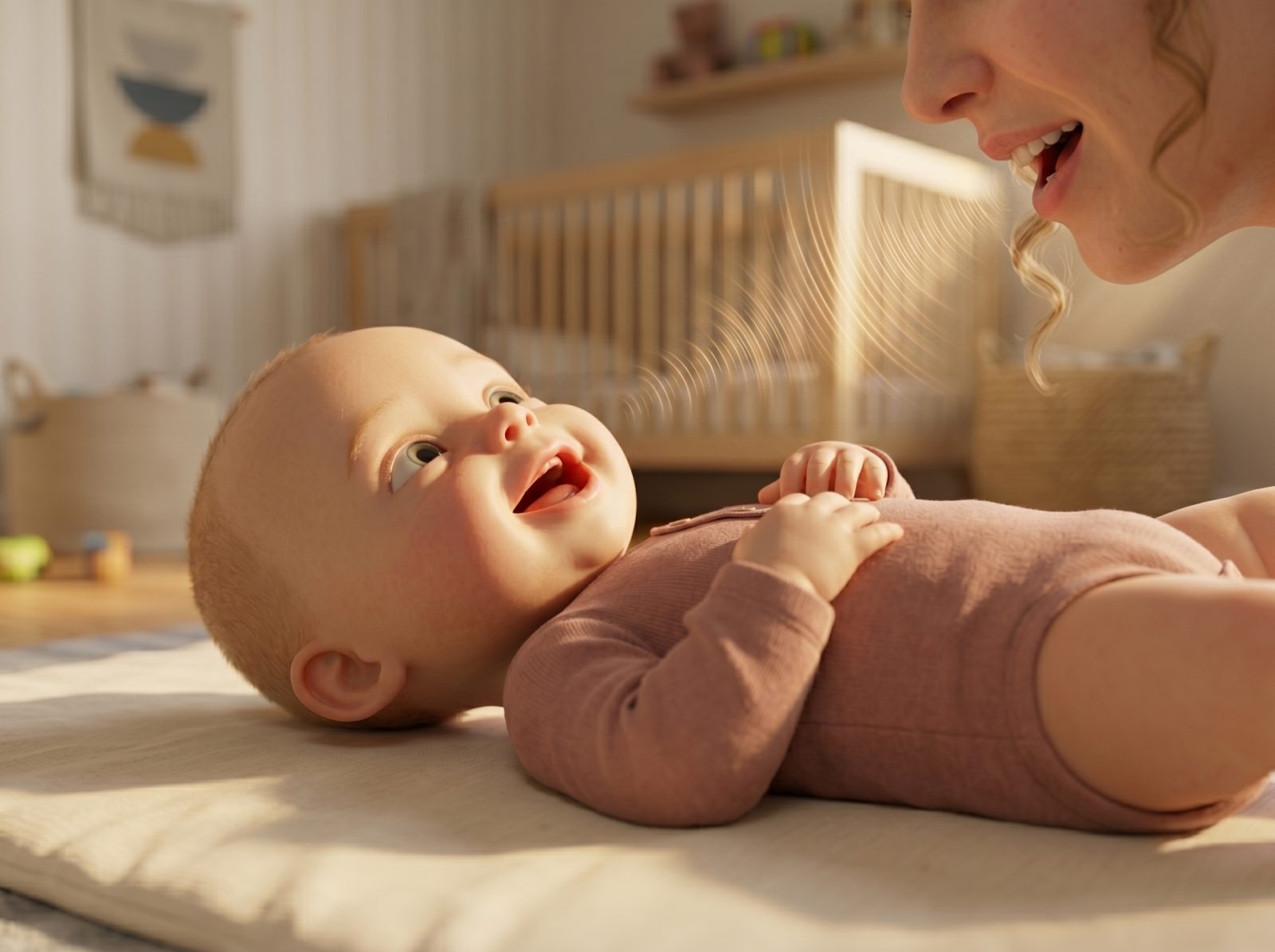
The infant responds with a warm, voluntary social smile when the caregiver speaks to or smiles at them. This represents the transition from involuntary, physiological smiles to intentional, social interaction. It is an early milestone in social communication and emotional connection.
- 1. Get close to their face, make gentle eye contact, and say their name in a loving, expressive tone.
- 2. Stroke their cheeks or tickle their tummy gently to encourage a happy, smiling response.
- 3. Play interactive face games, raising your eyebrows or making a gentle popping sound with your lips.
- 1. Avoid maintaining a flat, unexpressive facial expression when interacting with the infant, as they look to you for emotional cues.
- 2. Do not worry if their early smiles are brief or fleeting; focus on creating a warm, responsive environment.
- 3. Avoid overstimulating the infant with loud, sudden noises or rapid movements to force a smile.