
Signs of Solid Food Readiness
Typical Timing & Development Window
Visual Timeline & Milestone Benchmarks
What these numbers mean
The average age babies first begin showing early signs of this skill. Before this, it's simply too early — there's nothing to worry about.
The midpoint age: half of babies have reached this milestone by here, half a little later. It's a typical target, not a deadline.
How spread out the timing is. About two-thirds of babies achieve it within one standard deviation of the median (the shaded band, wk 22–30). Wide bands mean a normal range of variation.
A gentle check-in point. If your baby hasn't shown this by around here, it can be worth mentioning to your pediatrician — most often it's still perfectly fine, just later.
About this milestone
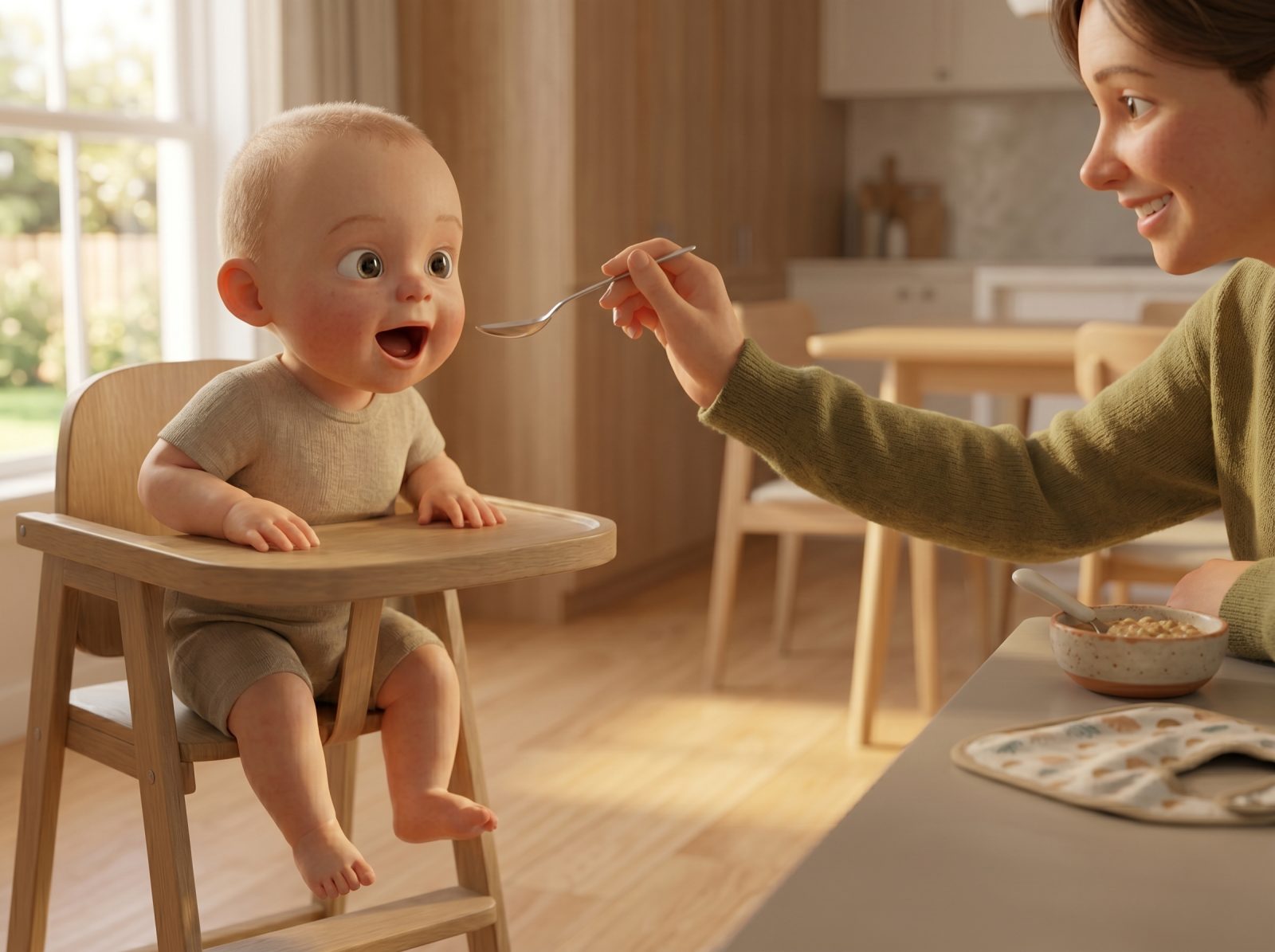
Assess the infant for physical solid food readiness signs: stable head control, sitting supported in a high chair, mouth opening for a spoon, and chewing motions.
- 1. Observe the baby in an upright high chair to confirm they can maintain head stability and torso alignment independently.
- 2. Confirm that the infant's protective tongue-thrust reflex has faded, meaning they do not automatically push spoon items out of their mouth.
- 3. Note whether the infant shows active visual interest in your food choices and opens their mouth when a spoon approaches.
- 1. Avoid starting any complementary solid foods before 17 completed weeks of life, as the digestive tract and kidneys remain immature.
- 2. Do not assume that an infant waking up at night or drinking more milk is an automatic sign of weaning readiness if physical markers are absent.
- 3. Avoid propping an infant up with heavy cushions to force feed them if they cannot sit upright with minimal support.