
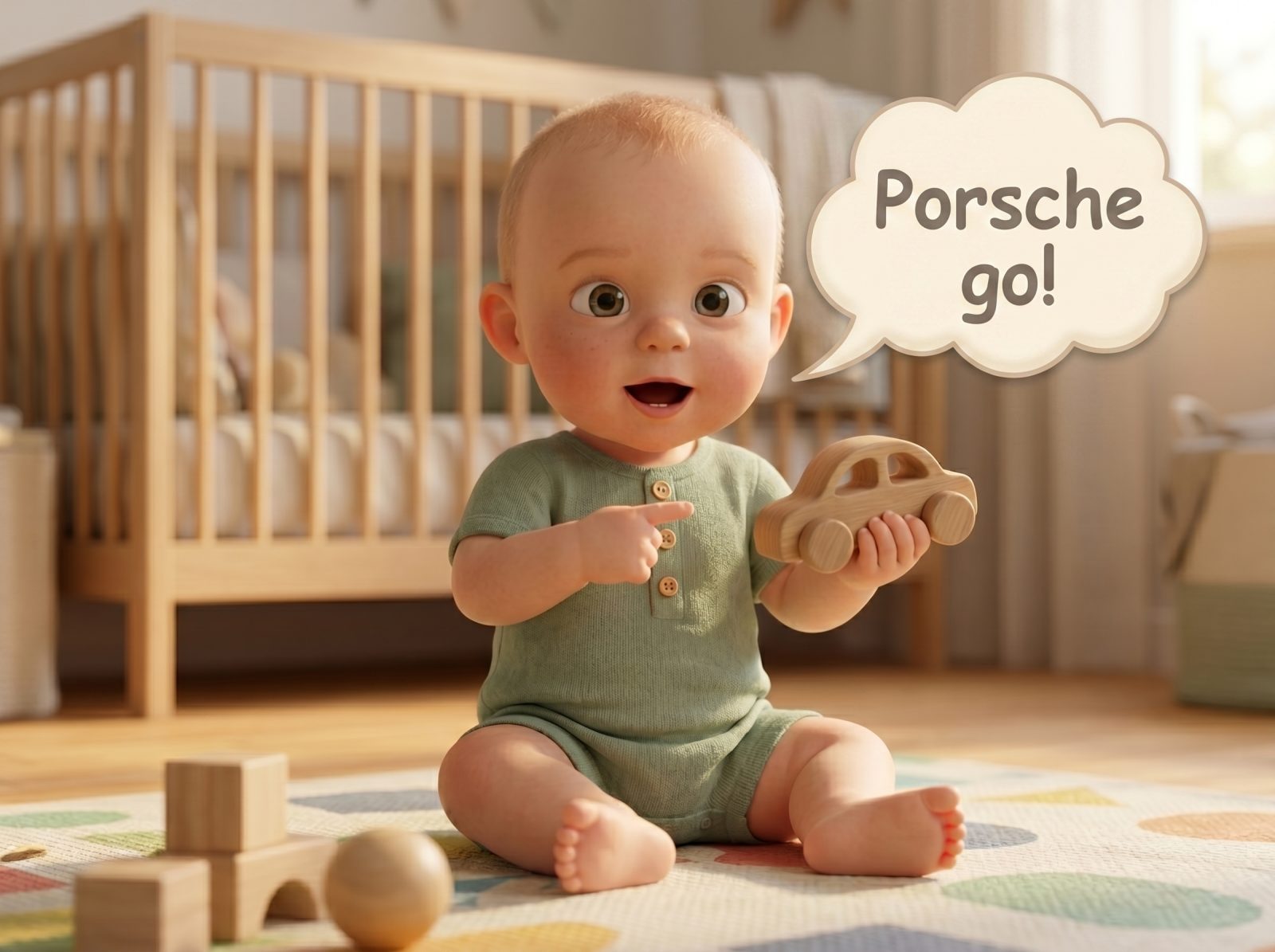
Says two words together
Typical Timing & Development Window
Visual Timeline & Milestone Benchmarks
What these numbers mean
The average age babies first begin showing early signs of this skill. Before this, it's simply too early — there's nothing to worry about.
The midpoint age: half of babies have reached this milestone by here, half a little later. It's a typical target, not a deadline.
How spread out the timing is. About two-thirds of babies achieve it within one standard deviation of the median (the shaded band, wk 84–96). Wide bands mean a normal range of variation.
A gentle check-in point. If your baby hasn't shown this by around here, it can be worth mentioning to your pediatrician — most often it's still perfectly fine, just later.
About this milestone
The toddler combines two spoken words to express a complete thought or request (e.g., 'more milk', 'go out', 'bye-bye dog'). This is the onset of early syntactic development and grammatical planning. It demonstrates that they are beginning to understand how to combine words to form larger meanings.
- 1. Read books and narrate what you see using simple two-word descriptions ('Big dog', 'Green leaf').
- 2. Ask simple choices that encourage a two-word response ('Do you want apple slice or banana slice?').
- 3. Play with toy foods or animals, modeling action phrases like 'Eat food' or 'Horse jump'.
- 1. Do not worry about word counts; the key milestone is the consistent combining of any two words together.
- 2. Avoid using long, complex sentences when a simple, direct phrase is more helpful for their learning.