Reacts to loud sounds
Typical Timing & Development Window
Visual Timeline & Milestone Benchmarks
What these numbers mean
The average age babies first begin showing early signs of this skill. Before this, it's simply too early — there's nothing to worry about.
The midpoint age: half of babies have reached this milestone by here, half a little later. It's a typical target, not a deadline.
How spread out the timing is. About two-thirds of babies achieve it within one standard deviation of the median (the shaded band, wk 2–6). Wide bands mean a normal range of variation.
A gentle check-in point. If your baby hasn't shown this by around here, it can be worth mentioning to your pediatrician — most often it's still perfectly fine, just later.
About this milestone
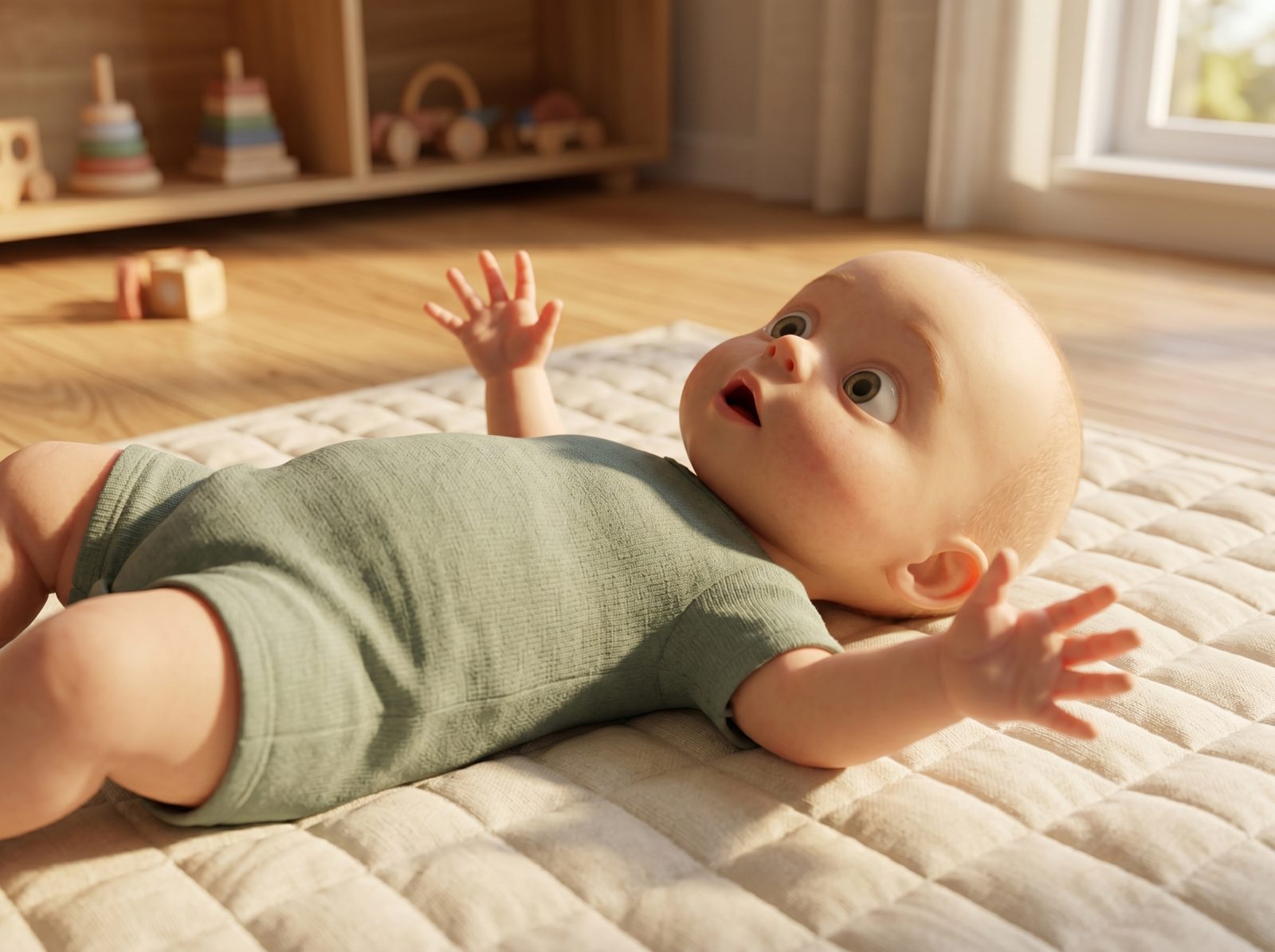
The infant startles, cries, blinks, or pauses their activity in response to a sudden, loud sound nearby. This reflex-driven reaction is the earliest indicator of functional hearing and auditory processing. It is critical for environmental awareness and early sensory safety.
- 1. Observe the infant's physical reaction (e.g., eye widening, body startle) when a door closes or a dog barks.
- 2. Gently rattle a toy or shake keys a few feet away from the infant to see if they react or quiet down.
- 3. Speak to the infant in a soft, soothing tone to help them calm down after a loud, startling noise.
- 4. Ensure the home has varied natural sounds, avoiding a completely silent environment during the day.
- 1. Avoid sudden, loud sounds right next to the infant's ear, which can cause distress and unnecessary fright.