Pulls self up to stand
Typical Timing & Development Window
Visual Timeline & Milestone Benchmarks
What these numbers mean
The average age babies first begin showing early signs of this skill. Before this, it's simply too early — there's nothing to worry about.
The midpoint age: half of babies have reached this milestone by here, half a little later. It's a typical target, not a deadline.
How spread out the timing is. About two-thirds of babies achieve it within one standard deviation of the median (the shaded band, wk 43–53). Wide bands mean a normal range of variation.
A gentle check-in point. If your baby hasn't shown this by around here, it can be worth mentioning to your pediatrician — most often it's still perfectly fine, just later.
About this milestone
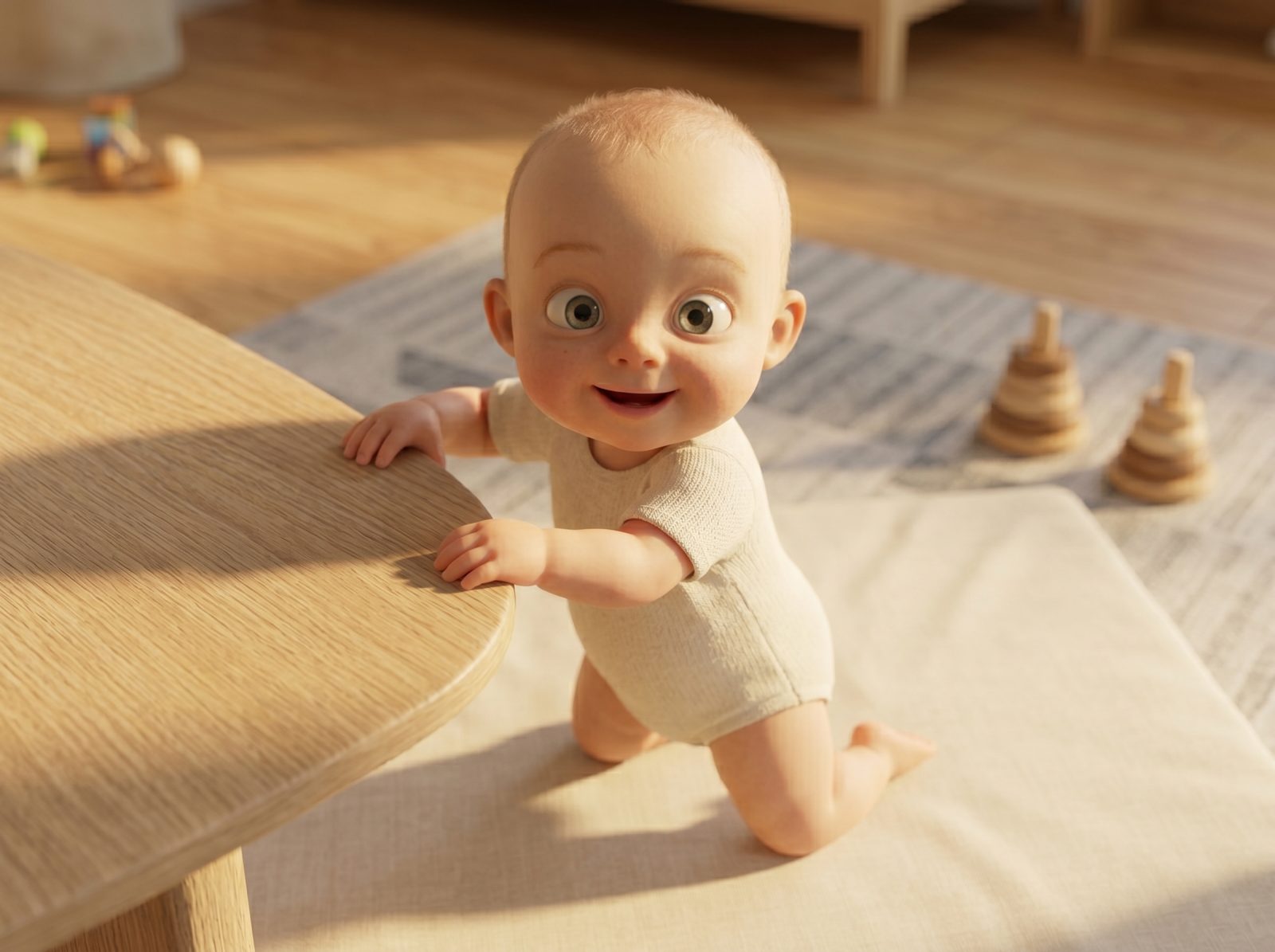
The infant uses stable furniture or an adult's hands to pull their body upward from a sitting or kneeling position into a standing posture. This activity builds immense lower body strength, particularly in the quadriceps and gluteal muscles, while promoting ankle stability. It is a critical milestone on the path to independent walking.
- 1. Place tempting, highly desired toys on a low, sturdy table or the couch cushion to motivate the infant to stand up to reach them.
- 2. Sit on the floor, offer your hands to the infant, and encourage them to pull themselves up to stand using your grip.
- 3. Place a firm, low footstool on the floor, guiding the infant to kneel against it and then step up to a stand.
- 4. Practice transition games, encouraging the infant to sit down from standing by slowly lowering themselves.
- 1. Avoid using commercial baby walkers, which can cause serious injuries, delay natural walking, and promote abnormal toe-walking.
- 2. Do not use lightweight or unstable furniture (like unstable side tables) that could tip over when the infant pulls on it.
- 3. Avoid wearing slippery socks on the infant; bare feet or non-slip grip socks provide the best sensory feedback and traction.
Connected Development Leap
The World of Categories
Peaks around week 37Sorting objects, sounds and situations into groups — the groundwork for language. They notice that all dogs bark, all bowls hold food, all hands have fingers.