Self-Care
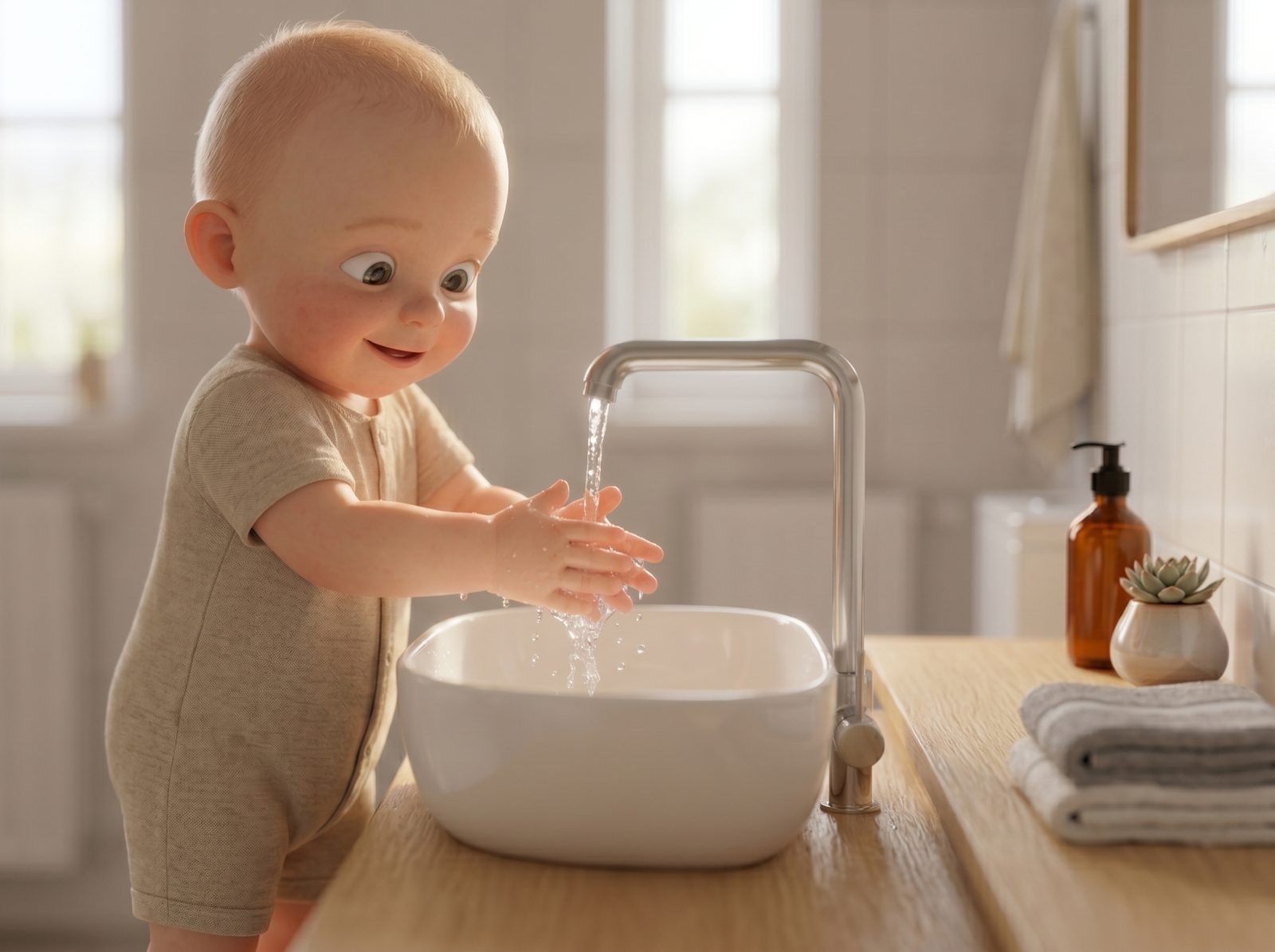
Practical Life Routines & Hand Washing
Typical Timing & Development Window
Starts
87
wk avg
Median
104
wk
Std dev
±6
wk
Flag
116
wk
Visual Timeline & Milestone Benchmarks
Typical range (68% of babies)
Earliest typical start
Median milestone age
Pediatrician check-in flag
What these numbers mean
Starts
~wk 87
The average age babies first begin showing early signs of this skill. Before this, it's simply too early — there's nothing to worry about.
Median
wk 104
The midpoint age: half of babies have reached this milestone by here, half a little later. It's a typical target, not a deadline.
Std dev
±6 wk
How spread out the timing is. About two-thirds of babies achieve it within one standard deviation of the median (the shaded band, wk 98–110). Wide bands mean a normal range of variation.
Flag
wk 116
A gentle check-in point. If your baby hasn't shown this by around here, it can be worth mentioning to your pediatrician — most often it's still perfectly fine, just later.
About this milestone
Support independence and motor coordination by practicing basic everyday routines like washing hands and simple dressing.
What to try & how to support
- 1. Help the toddler wash their hands with soap, guiding them to rinse and dry them independently.
- 2. Encourage the toddler to pull off loose clothing items like socks, shoes, or unzipped jackets.
- 3. Provide child-sized spoons and forks and allow them to manage meals with minimal assistance.
What to avoid & gentle reminders
- 1. Avoid taking over practical self-care steps completely due to time constraints; allow extra time for the toddler to try things on their own.
- 2. Do not use dangerously hot water setups or harsh chemical sanitizers near sensitive child skin barriers.
- 3. Avoid buying overly restrictive, tight clothing options with tiny buttons that discourage independent dressing practice.