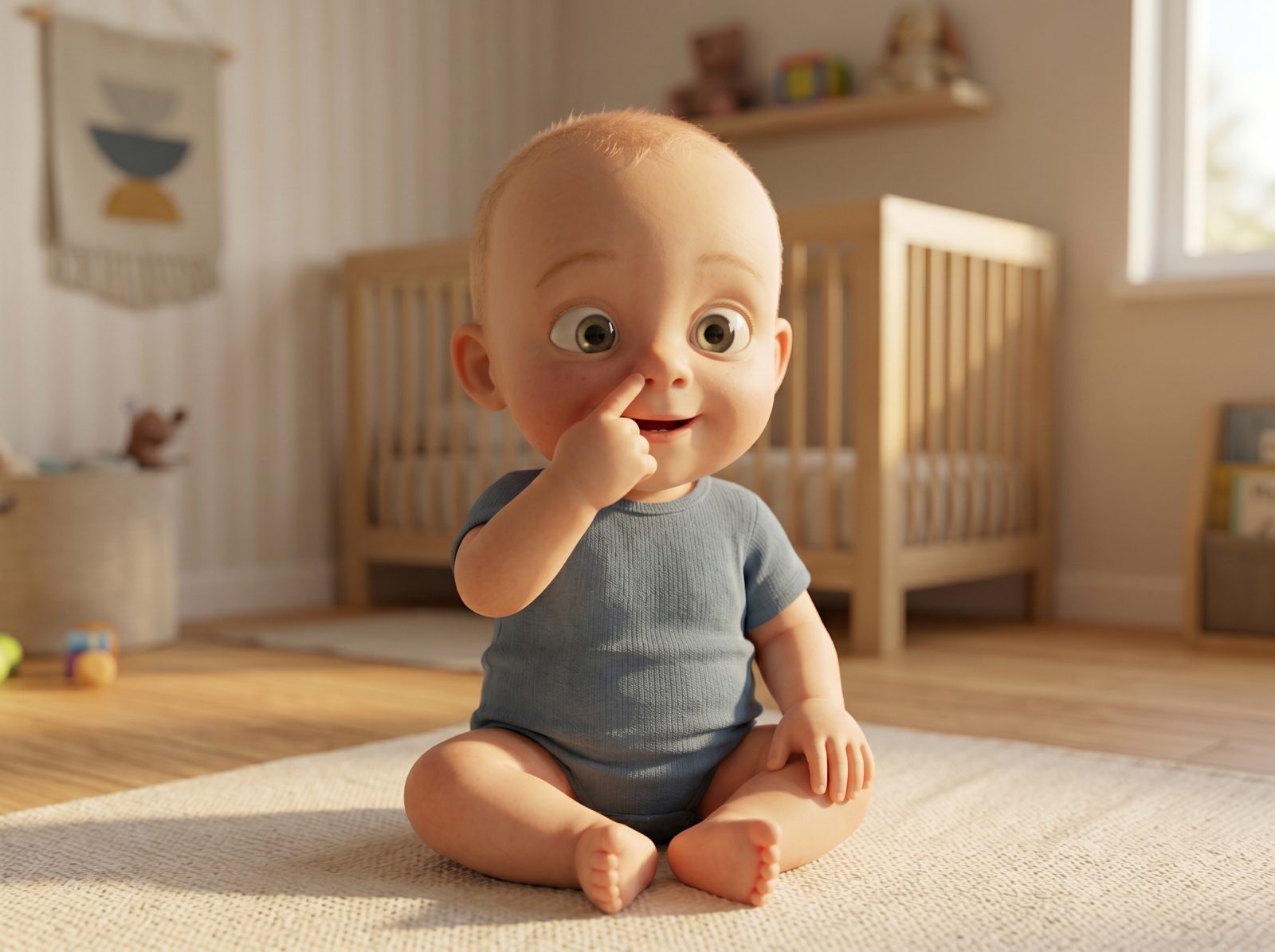
Points to named body parts
Typical Timing & Development Window
Visual Timeline & Milestone Benchmarks
What these numbers mean
The average age babies first begin showing early signs of this skill. Before this, it's simply too early — there's nothing to worry about.
The midpoint age: half of babies have reached this milestone by here, half a little later. It's a typical target, not a deadline.
How spread out the timing is. About two-thirds of babies achieve it within one standard deviation of the median (the shaded band, wk 78–90). Wide bands mean a normal range of variation.
A gentle check-in point. If your baby hasn't shown this by around here, it can be worth mentioning to your pediatrician — most often it's still perfectly fine, just later.
About this milestone
The toddler points to at least two correct body parts (such as 'nose', 'eyes', or 'toes') when asked by a caregiver. This demonstrates stable receptive vocabulary and an emerging mental model of their own physical body. It bridges the gap between language comprehension, spatial awareness, and self-identity.
- 1. Sing active songs like 'Head, Shoulders, Knees, and Toes', pointing to each body part as you sing.
- 2. Use a safe mirror, encouraging the toddler to point to their reflection's eyes, ears, and mouth.
- 3. Read books about the body, asking the toddler to point to the character's hands, feet, or belly.
- 1. Avoid using overly medical or confusing terms initially; stick to clear, simple, and high-frequency names.