
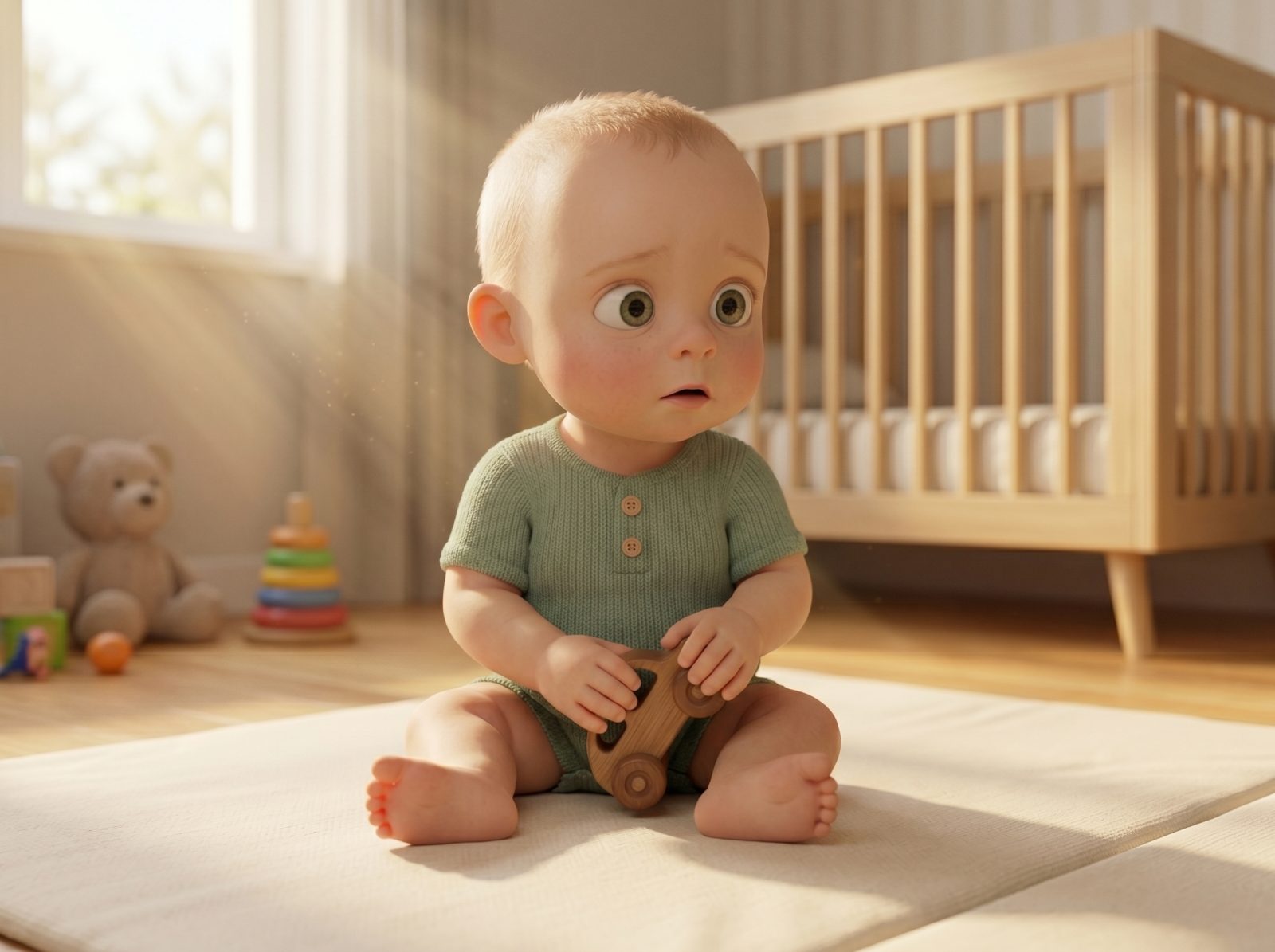
Notices when others are upset
Typical Timing & Development Window
Visual Timeline & Milestone Benchmarks
What these numbers mean
The average age babies first begin showing early signs of this skill. Before this, it's simply too early — there's nothing to worry about.
The midpoint age: half of babies have reached this milestone by here, half a little later. It's a typical target, not a deadline.
How spread out the timing is. About two-thirds of babies achieve it within one standard deviation of the median (the shaded band, wk 82–94). Wide bands mean a normal range of variation.
A gentle check-in point. If your baby hasn't shown this by around here, it can be worth mentioning to your pediatrician — most often it's still perfectly fine, just later.
About this milestone
The toddler pauses, looks sad, or quietens down when they see someone crying or upset. This is the earliest behavioral indicator of empathy, emotional mirroring, and social awareness. It shows they are beginning to process other people's feelings and connect them to their own emotional state.
- 1. Validate the toddler's own feelings, helping them learn that all emotions are normal and manageable.
- 1. Avoid dismissing or minimizing a toddler's concern when they observe others upset; validate feelings.