Nods and shakes head for Yes/No
Typical Timing & Development Window
Visual Timeline & Milestone Benchmarks
What these numbers mean
The average age babies first begin showing early signs of this skill. Before this, it's simply too early — there's nothing to worry about.
The midpoint age: half of babies have reached this milestone by here, half a little later. It's a typical target, not a deadline.
How spread out the timing is. About two-thirds of babies achieve it within one standard deviation of the median (the shaded band, wk 63–73). Wide bands mean a normal range of variation.
A gentle check-in point. If your baby hasn't shown this by around here, it can be worth mentioning to your pediatrician — most often it's still perfectly fine, just later.
About this milestone
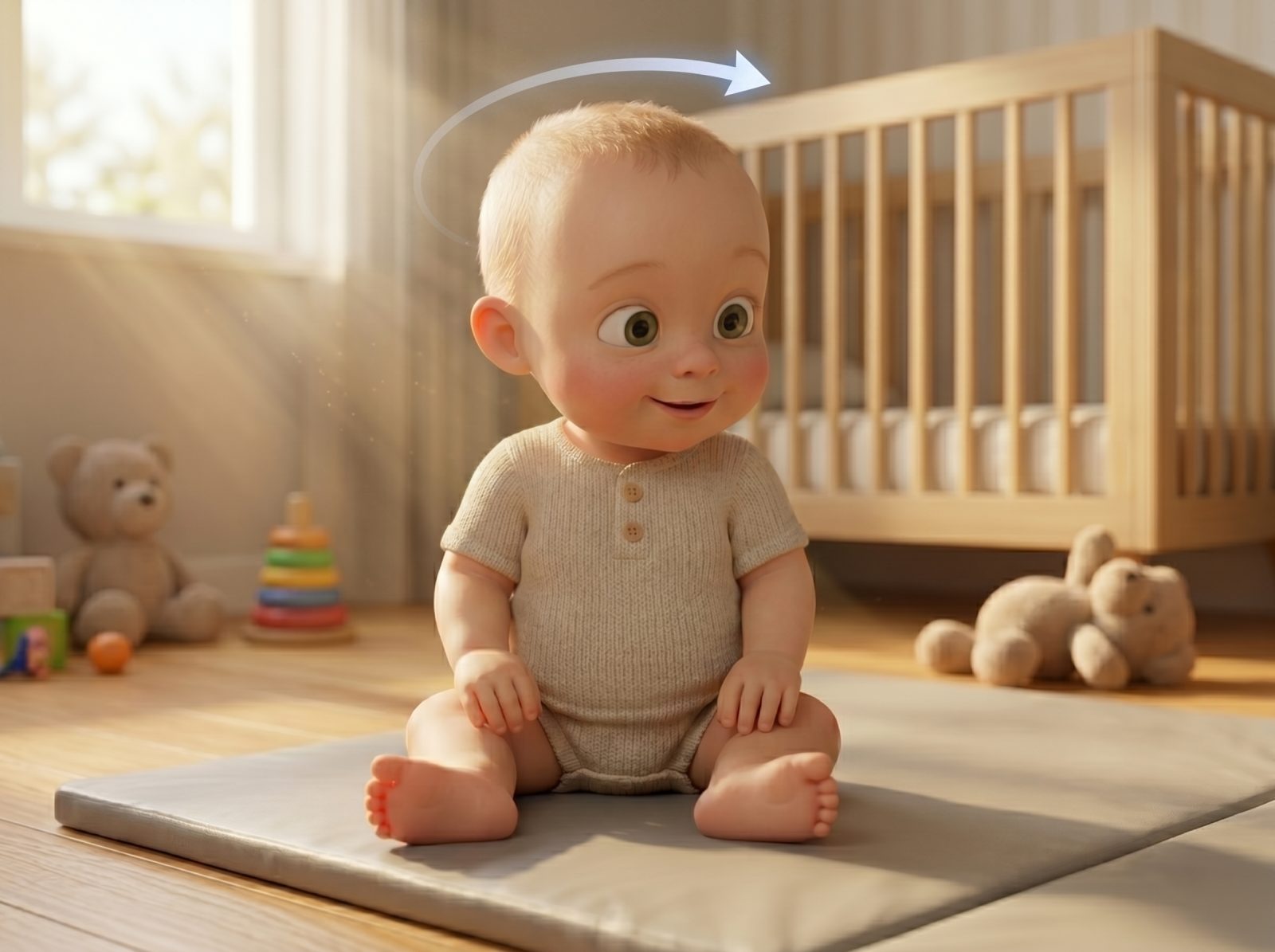
The toddler intentionally shakes their head side-to-side to indicate refusal or nods up-and-down to indicate acceptance. This bridges the gap between pure crying/screaming expressions and symbolic non-verbal vocabulary.
- 1. Pair your own verbal questions with dramatic head nods or shakes ('Do you want more? Yes?').
- 2. Respect their non-verbal shake by stopping the offered activity, reinforcing that their communication has power.
- 3. Ask clear, binary options during snack or play times to give them easy opportunities to practice.
- 1. Avoid ignoring a clear head shake of refusal, as overriding it can lead to frustration tantrums.
- 2. Do not get frustrated if they occasionally mix up the meanings of the nod and the shake; their mapping is still refining.