
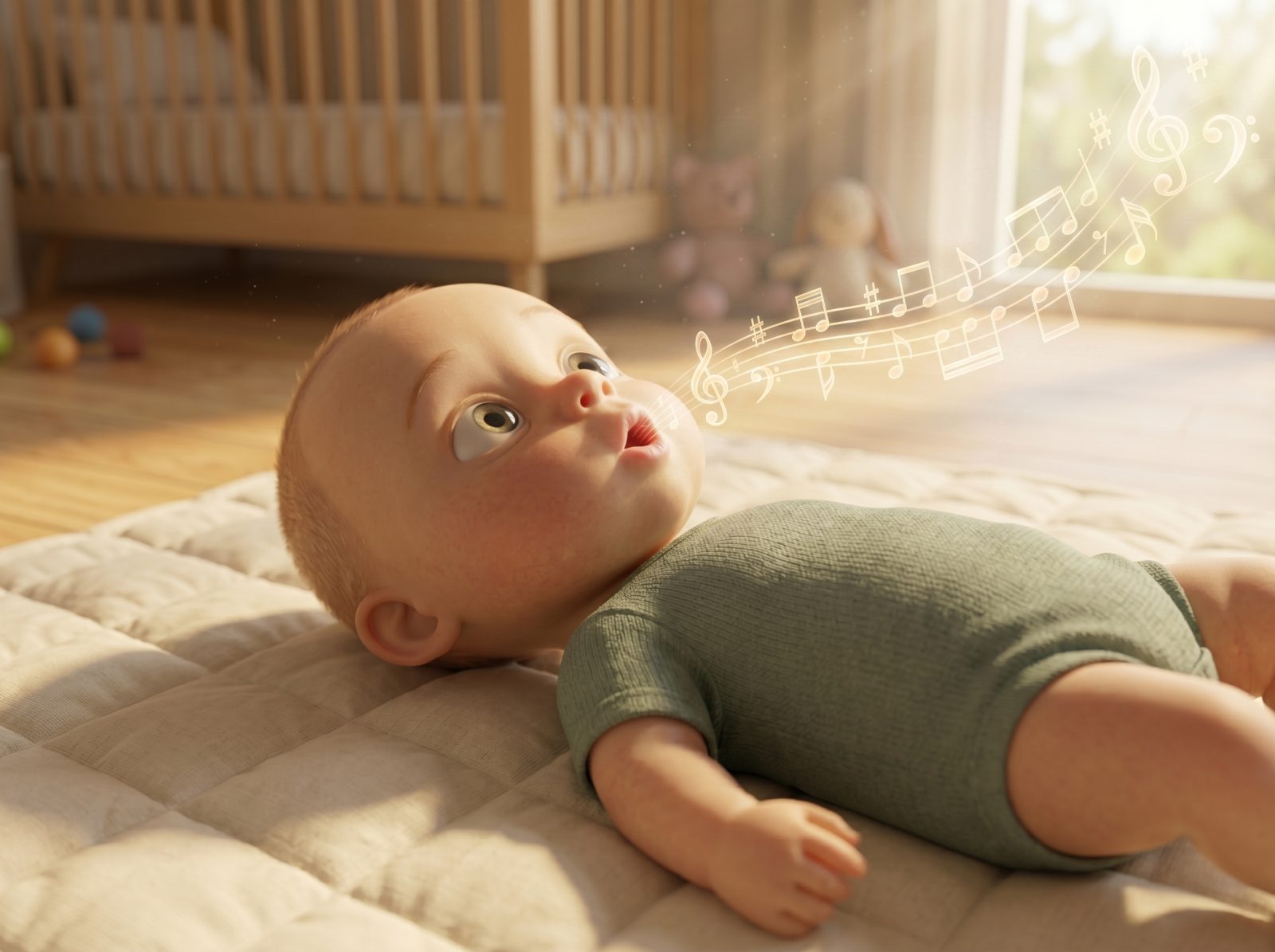
Makes cooing sounds
Typical Timing & Development Window
Visual Timeline & Milestone Benchmarks
What these numbers mean
The average age babies first begin showing early signs of this skill. Before this, it's simply too early — there's nothing to worry about.
The midpoint age: half of babies have reached this milestone by here, half a little later. It's a typical target, not a deadline.
How spread out the timing is. About two-thirds of babies achieve it within one standard deviation of the median (the shaded band, wk 9–15). Wide bands mean a normal range of variation.
A gentle check-in point. If your baby hasn't shown this by around here, it can be worth mentioning to your pediatrician — most often it's still perfectly fine, just later.
About this milestone
The infant produces vowel-like sounds such as 'oooo', 'aahh', or 'gaga' when calm and happy. This is the first step in active vocal exploration and vocal-cord coordination. It lays the physical and social foundation for speech development and back-and-forth communication.
- 1. Speak to the infant using 'parentese' (a high-pitched, slow, and melodic voice), which naturally captures their attention.
- 2. Sing simple, slow songs and pause frequently, giving the infant time to respond with their own sounds.
- 3. Narrate your daily activities ('Mommy is washing your hands') to surround the infant with rich language.
- 1. Avoid interrupting the infant when they are vocalizing; let them finish their 'statement' before you respond.
- 2. Do not keep the TV or background radio on constantly, as white noise can drown out their attempts and make it hard to hear speech sounds.
- 3. Avoid worrying if the sounds are quiet or infrequent initially; focus on warm, responsive interactions.