
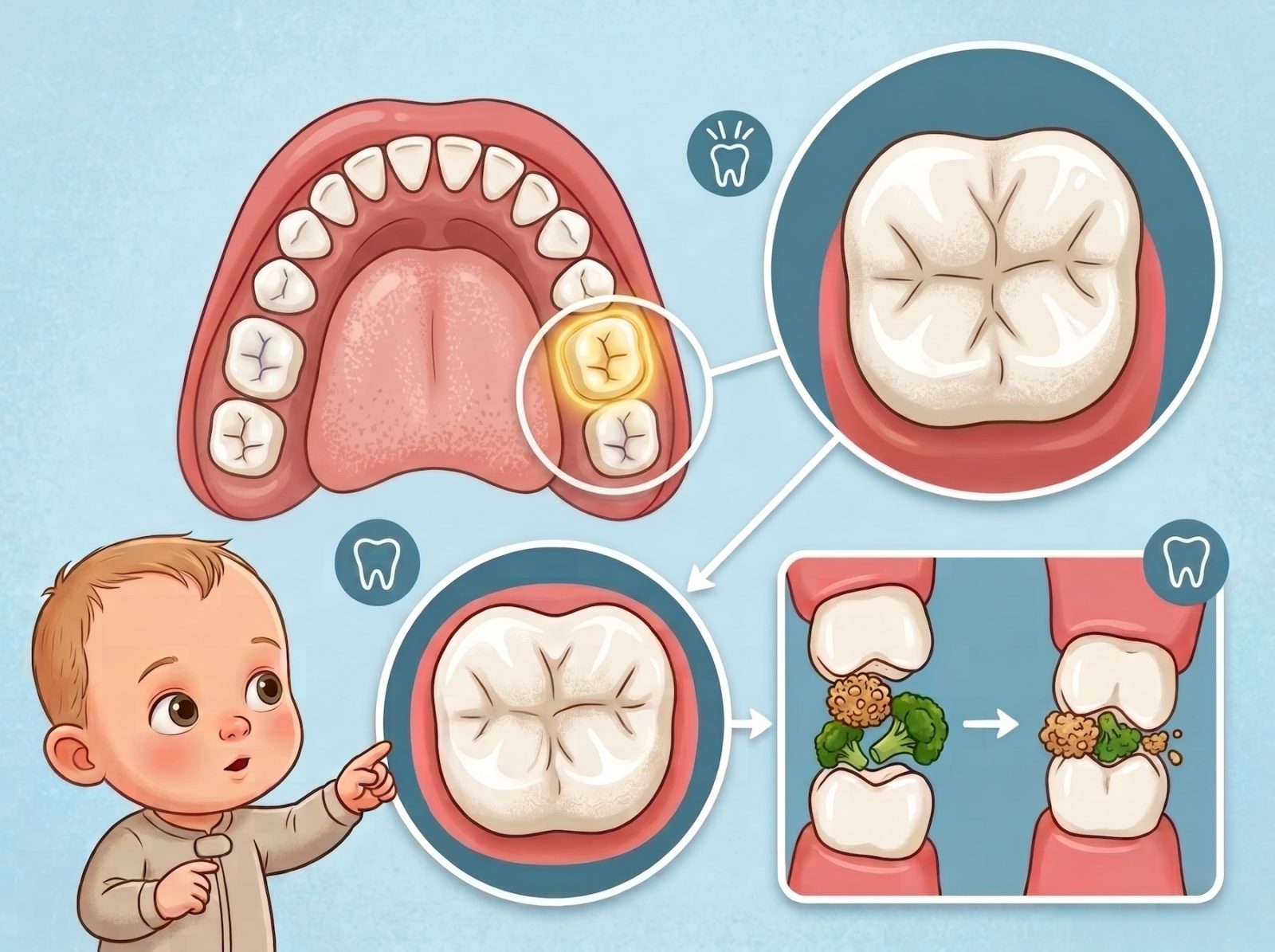
Lower First Molars Eruption
Typical Timing & Development Window
Visual Timeline & Milestone Benchmarks
What these numbers mean
The average age babies first begin showing early signs of this skill. Before this, it's simply too early — there's nothing to worry about.
The midpoint age: half of babies have reached this milestone by here, half a little later. It's a typical target, not a deadline.
How spread out the timing is. About two-thirds of babies achieve it within one standard deviation of the median (the shaded band, wk 65–73). Wide bands mean a normal range of variation.
A gentle check-in point. If your baby hasn't shown this by around here, it can be worth mentioning to your pediatrician — most often it's still perfectly fine, just later.
About this milestone
The lower first molars erupt to meet the upper molars, providing matching surfaces for true chewing and grinding of textured foods.
- 1. Give the toddler thick silicone teething toys to chew on, providing the safe counter-pressure needed for back teeth.
- 2. Keep a close watch on sleep patterns, as deep molar pressure can cause temporary nighttime wakefulness.
- 3. Ensure family meals contain slightly textured, safe foods to exercise their emerging chewing skills.
- 1. Avoid whole, un-cut round shapes like grapes or hot dogs, which bypass grinding actions and create severe choking risks.
- 2. Avoid using unverified or unregulated homeopathic teething remedies or teething tablets.
- 3. Avoid introducing highly processed sugary snacks to celebrate new chewing abilities, as new molar crevices are highly susceptible to early cavities.