
Teeth
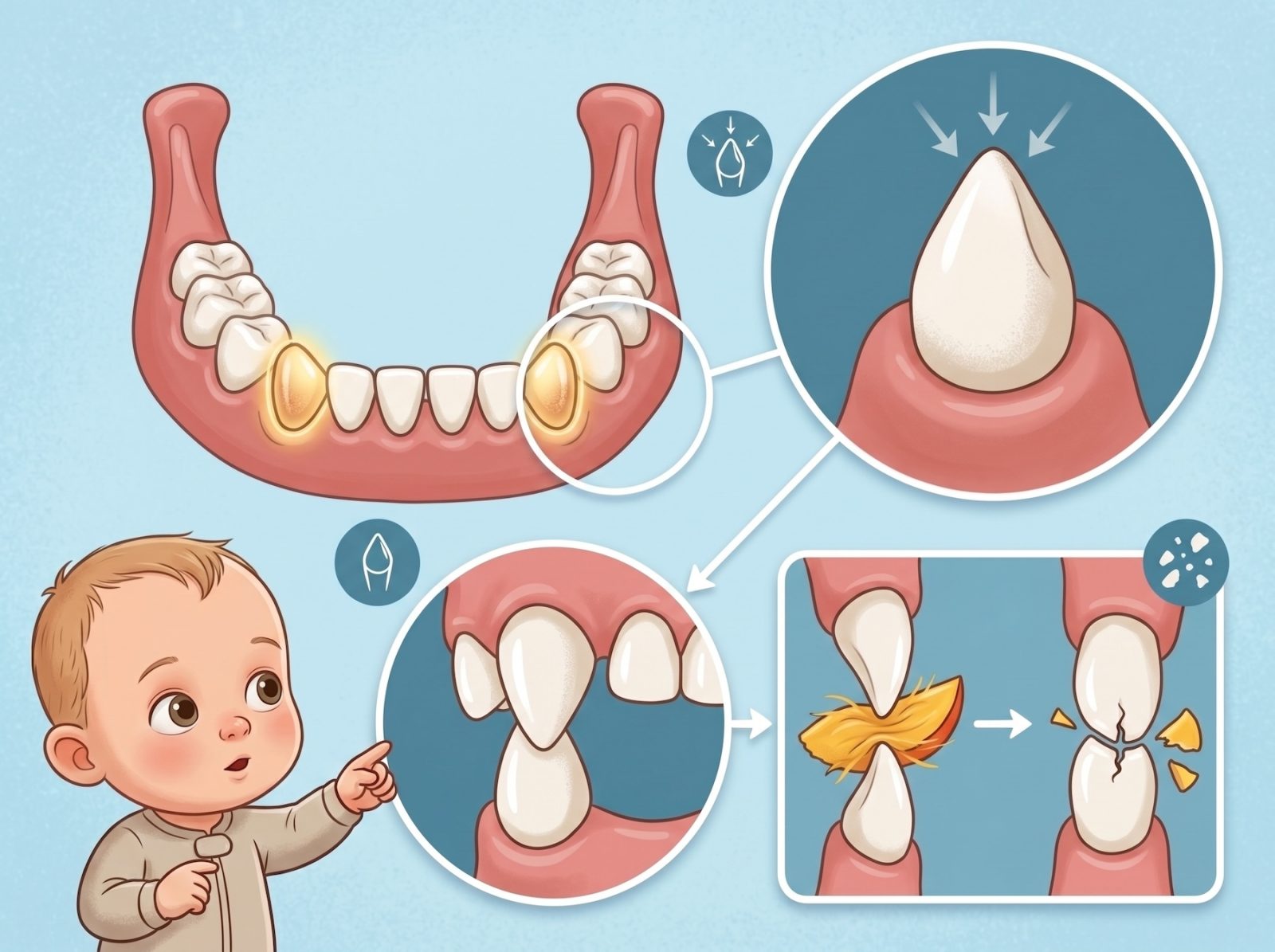
Lower Canines Eruption
Typical Timing & Development Window
Starts
69
wk avg
Median
87
wk
Std dev
±6
wk
Flag
99
wk
Visual Timeline & Milestone Benchmarks
Typical range (68% of babies)
Earliest typical start
Median milestone age
Pediatrician check-in flag
What these numbers mean
Starts
~wk 69
The average age babies first begin showing early signs of this skill. Before this, it's simply too early — there's nothing to worry about.
Median
wk 87
The midpoint age: half of babies have reached this milestone by here, half a little later. It's a typical target, not a deadline.
Std dev
±6 wk
How spread out the timing is. About two-thirds of babies achieve it within one standard deviation of the median (the shaded band, wk 81–93). Wide bands mean a normal range of variation.
Flag
wk 99
A gentle check-in point. If your baby hasn't shown this by around here, it can be worth mentioning to your pediatrician — most often it's still perfectly fine, just later.
About this milestone
The lower canines erupt, completing the primary canine set and helping stabilize the primary jaw and bite arch.
What to try & how to support
- 1. Maintain regular morning and evening brushing habits, ensuring a pea-sized amount of fluoride paste is used once they turn two.
- 2. Support their chewing needs by providing dense, safe food textures like chilled cucumber slices under direct supervision.
- 3. Schedule standard follow-up toddler dental visits to ensure healthy tracking across the entire primary bite arch.
What to avoid & gentle reminders
- 1. Avoid skipping brushing because of toddler pushback; use playful games or songs to keep them engaged.
- 2. Avoid sharing cups, spoons, or pacifiers with your own mouth, as this can transfer cavity-causing bacteria to the child.