
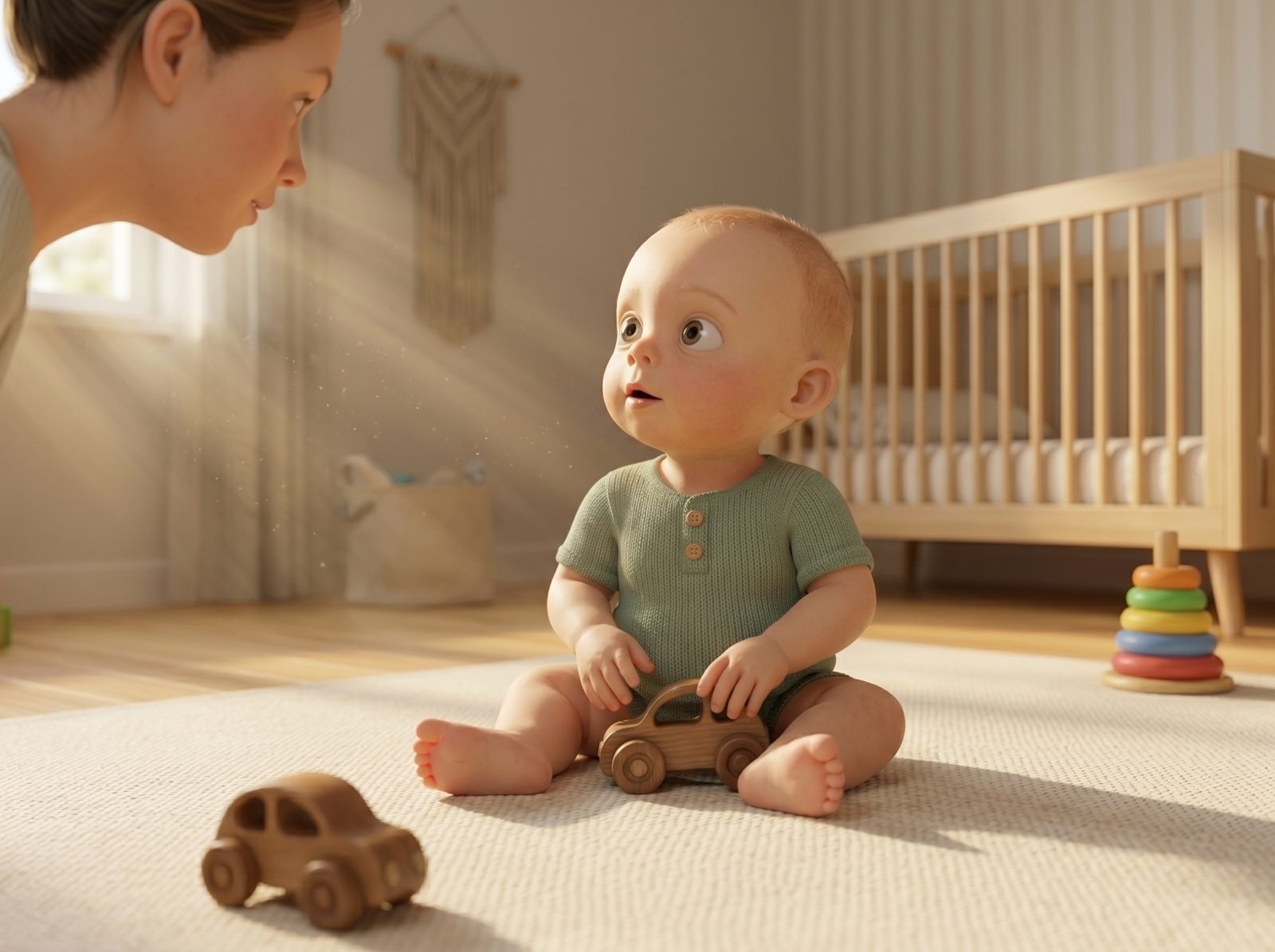
Looks at face for reaction
Typical Timing & Development Window
Visual Timeline & Milestone Benchmarks
What these numbers mean
The average age babies first begin showing early signs of this skill. Before this, it's simply too early — there's nothing to worry about.
The midpoint age: half of babies have reached this milestone by here, half a little later. It's a typical target, not a deadline.
How spread out the timing is. About two-thirds of babies achieve it within one standard deviation of the median (the shaded band, wk 74–86). Wide bands mean a normal range of variation.
A gentle check-in point. If your baby hasn't shown this by around here, it can be worth mentioning to your pediatrician — most often it's still perfectly fine, just later.
About this milestone
The toddler looks at the caregiver's face to see how to react in a new, unfamiliar, or surprising situation (social referencing). This demonstrates cognitive-emotional integration, trust, and reliance on the caregiver as a secure base. It is a critical milestone in social learning and safety awareness.
- 1. Use a warm, confident voice to let them know they are safe and encourage them to explore gently.
- 2. Position yourself nearby so they can easily make eye contact with you when they are unsure or surprised.
- 3. Praise their careful curiosity, helping them build confidence in navigating new environments.
- 1. Do not leave the toddler to navigate highly unfamiliar or stressful situations without being close by to offer support.
- 2. Avoid laughing at their caution or fear; show them that you understand and are there to keep them safe.