Hydration Integration & Open Cup Drinking
Typical Timing & Development Window
Visual Timeline & Milestone Benchmarks
What these numbers mean
The average age babies first begin showing early signs of this skill. Before this, it's simply too early — there's nothing to worry about.
The midpoint age: half of babies have reached this milestone by here, half a little later. It's a typical target, not a deadline.
How spread out the timing is. About two-thirds of babies achieve it within one standard deviation of the median (the shaded band, wk 35–43). Wide bands mean a normal range of variation.
A gentle check-in point. If your baby hasn't shown this by around here, it can be worth mentioning to your pediatrician — most often it's still perfectly fine, just later.
About this milestone
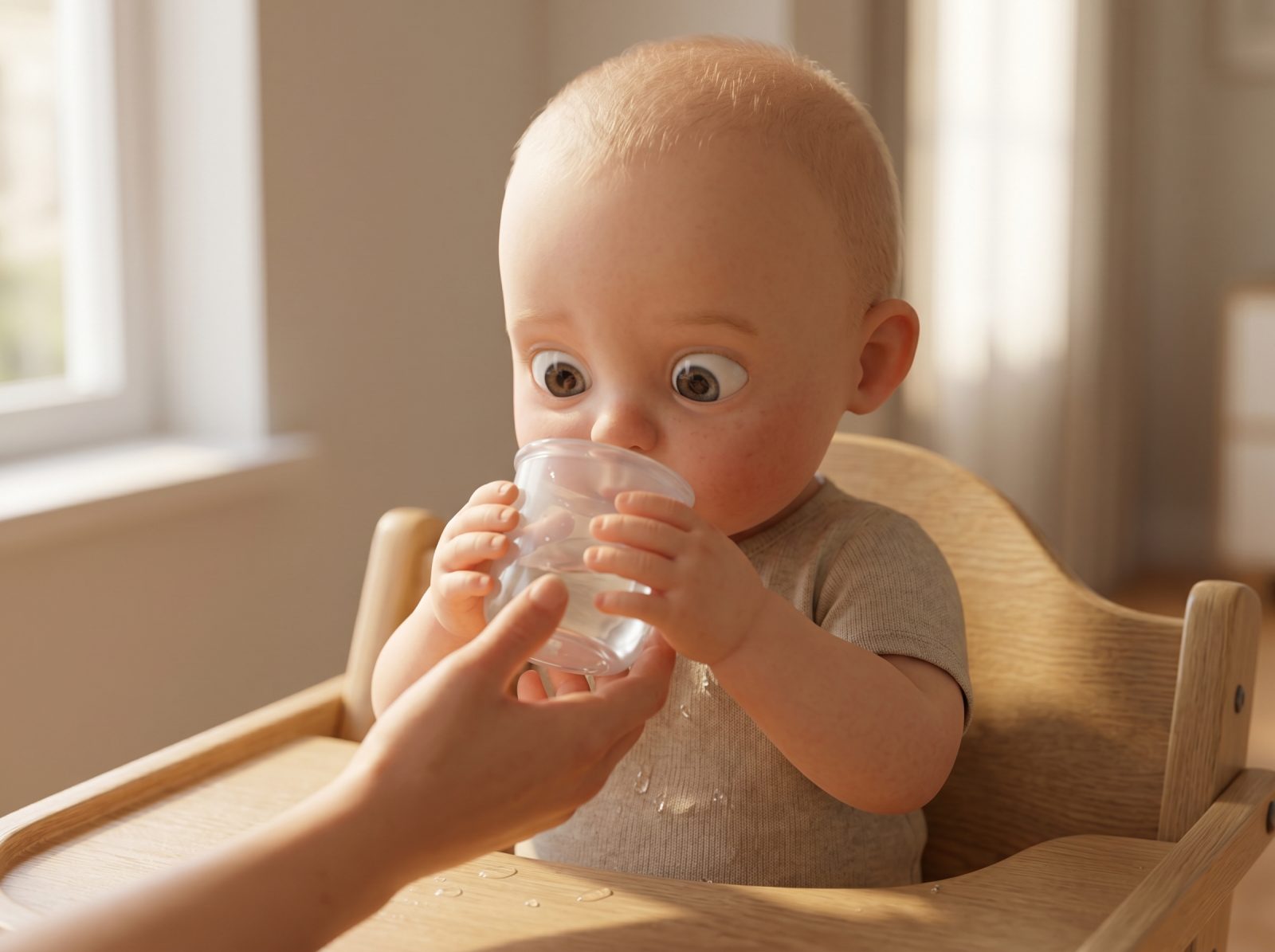
Introduce plain tap water or low-mineral bottled water from an open cup once all three purées have been successfully introduced.
- 1. Offer small sips of plain water from a small, lightweight open cup during meal times.
- 2. Hold the cup with the baby to help guide the flow and help them manage the cup's rim.
- 3. Use room-temperature water and keep the routine relaxed and positive, expecting a few spills.
- 1. Avoid offering sugary juices, sodas, or caffeinated/sweetened teas, which promote early childhood tooth decay.
- 2. Avoid relying on no-spill sippy cups with internal valves, as they prevent proper lip closure and alter mature swallowing movements.
- 3. Do not force water consumption; before 12 months, primary hydration needs continue to be met by breastmilk or formula loops.
Connected Development Leap
The World of Categories
Peaks around week 37Sorting objects, sounds and situations into groups — the groundwork for language. They notice that all dogs bark, all bowls hold food, all hands have fingers.