
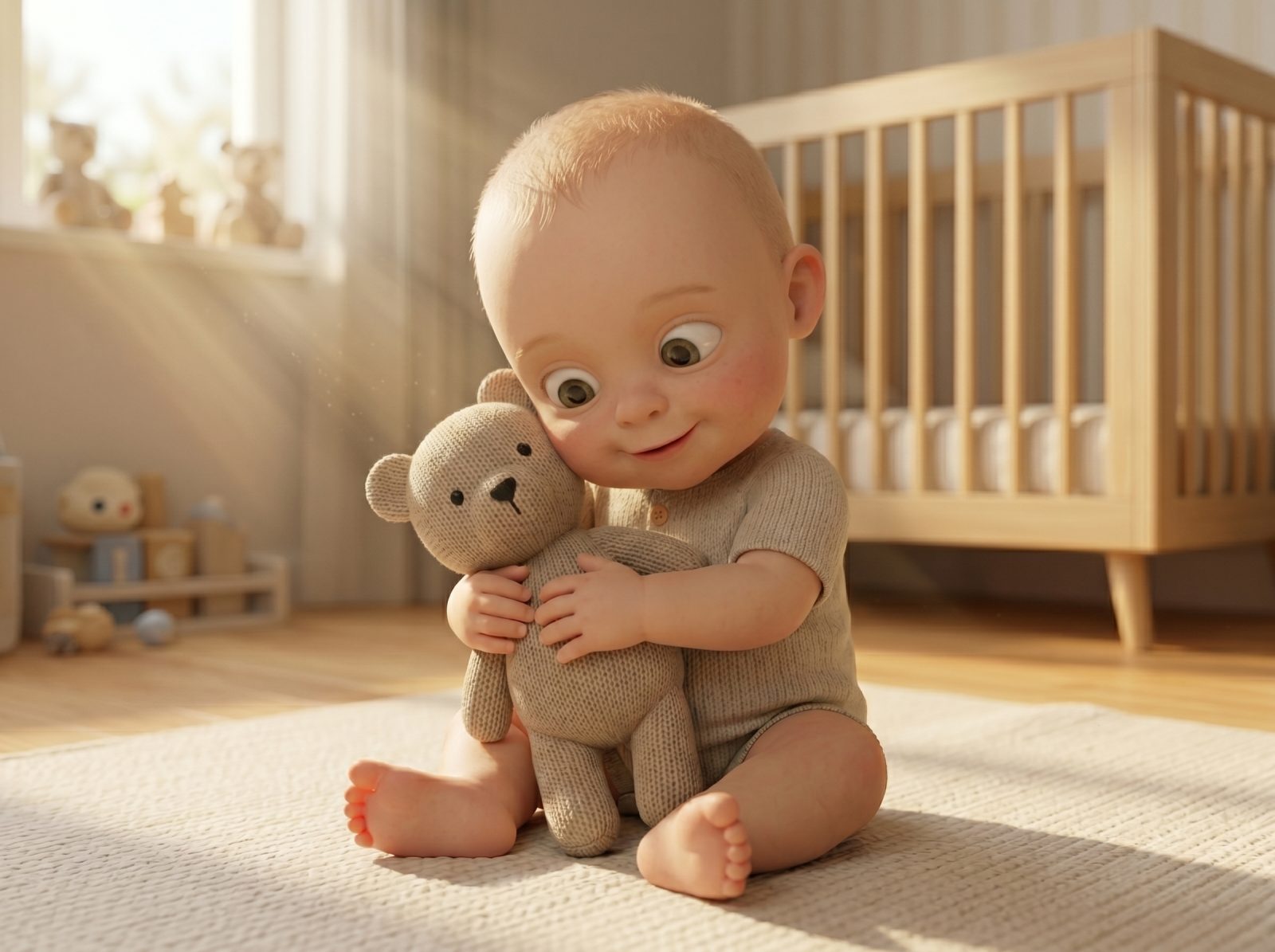
Hugs stuffed doll or toy
Typical Timing & Development Window
Visual Timeline & Milestone Benchmarks
What these numbers mean
The average age babies first begin showing early signs of this skill. Before this, it's simply too early — there's nothing to worry about.
The midpoint age: half of babies have reached this milestone by here, half a little later. It's a typical target, not a deadline.
How spread out the timing is. About two-thirds of babies achieve it within one standard deviation of the median (the shaded band, wk 52–60). Wide bands mean a normal range of variation.
A gentle check-in point. If your baby hasn't shown this by around here, it can be worth mentioning to your pediatrician — most often it's still perfectly fine, just later.
About this milestone
The toddler squeezes or hugs a stuffed animal, doll, or soft toy to show affection. This represents early pretend play, emotional projection, and the development of empathy. It shows they can express caring feelings toward objects, mimicking the comfort they receive from caregivers.
- 1. Provide the toddler with a soft, clean stuffed animal or doll that is easy for them to hold and squeeze.
- 2. Model hugging the toy yourself, saying 'Gentle hug' or 'We love the bear' in a warm, caring voice.
- 3. Incorporate the toy into daily routines, encouraging the toddler to tuck it in for a nap or give it a squeeze.
- 4. Read books about friendship and caring, pointing to pictures of characters hugging or sharing toys.
- 1. Avoid teasing the toddler or taking away their favorite comfort toy as a form of discipline, which can cause unnecessary distress.