
Self-Care
Household Mimicry & Pretend Play
Typical Timing & Development Window
Starts
65
wk avg
Median
78
wk
Std dev
±6
wk
Flag
90
wk
Visual Timeline & Milestone Benchmarks
Typical range (68% of babies)
Earliest typical start
Median milestone age
Pediatrician check-in flag
What these numbers mean
Starts
~wk 65
The average age babies first begin showing early signs of this skill. Before this, it's simply too early — there's nothing to worry about.
Median
wk 78
The midpoint age: half of babies have reached this milestone by here, half a little later. It's a typical target, not a deadline.
Std dev
±6 wk
How spread out the timing is. About two-thirds of babies achieve it within one standard deviation of the median (the shaded band, wk 72–84). Wide bands mean a normal range of variation.
Flag
wk 90
A gentle check-in point. If your baby hasn't shown this by around here, it can be worth mentioning to your pediatrician — most often it's still perfectly fine, just later.
About this milestone
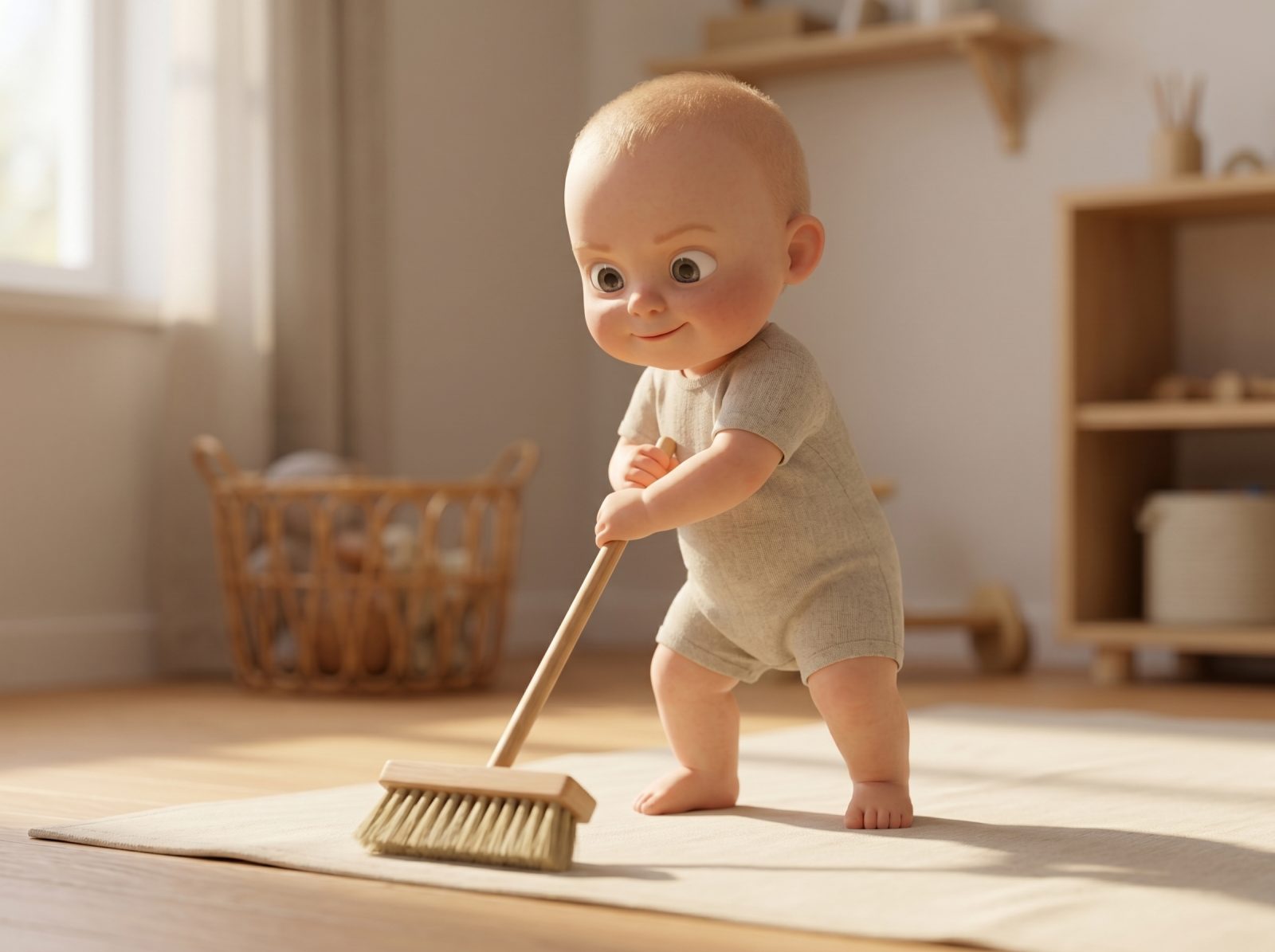
Encourage cognitive representation, socialization, and coordination by engaging in simple household mimicry play.
What to try & how to support
- 1. Provide child-sized, clean play items like a toy broom, a small dry cleaning cloth, or a plastic mixing spoon.
- 2. Involve the toddler in basic, low-risk routines like dropping clothes into a laundry basket or wiping a table surface.
- 3. Create simple pretend play setups using cardboard boxes, transformation tools, or plush kitchen sets.
What to avoid & gentle reminders
- 1. Avoid shutting down their clumsy attempts to help out of speed or convenience concerns; active participation builds confidence.
- 2. Never leave functional, hazardous, or chemical cleaning supplies within their reach during house chore sequences.
- 3. Avoid correcting their primitive play patterns; allow their imagination to combine toys freely.