Drinks from open cup
Typical Timing & Development Window
Visual Timeline & Milestone Benchmarks
What these numbers mean
The average age babies first begin showing early signs of this skill. Before this, it's simply too early — there's nothing to worry about.
The midpoint age: half of babies have reached this milestone by here, half a little later. It's a typical target, not a deadline.
How spread out the timing is. About two-thirds of babies achieve it within one standard deviation of the median (the shaded band, wk 100–108). Wide bands mean a normal range of variation.
A gentle check-in point. If your baby hasn't shown this by around here, it can be worth mentioning to your pediatrician — most often it's still perfectly fine, just later.
About this milestone
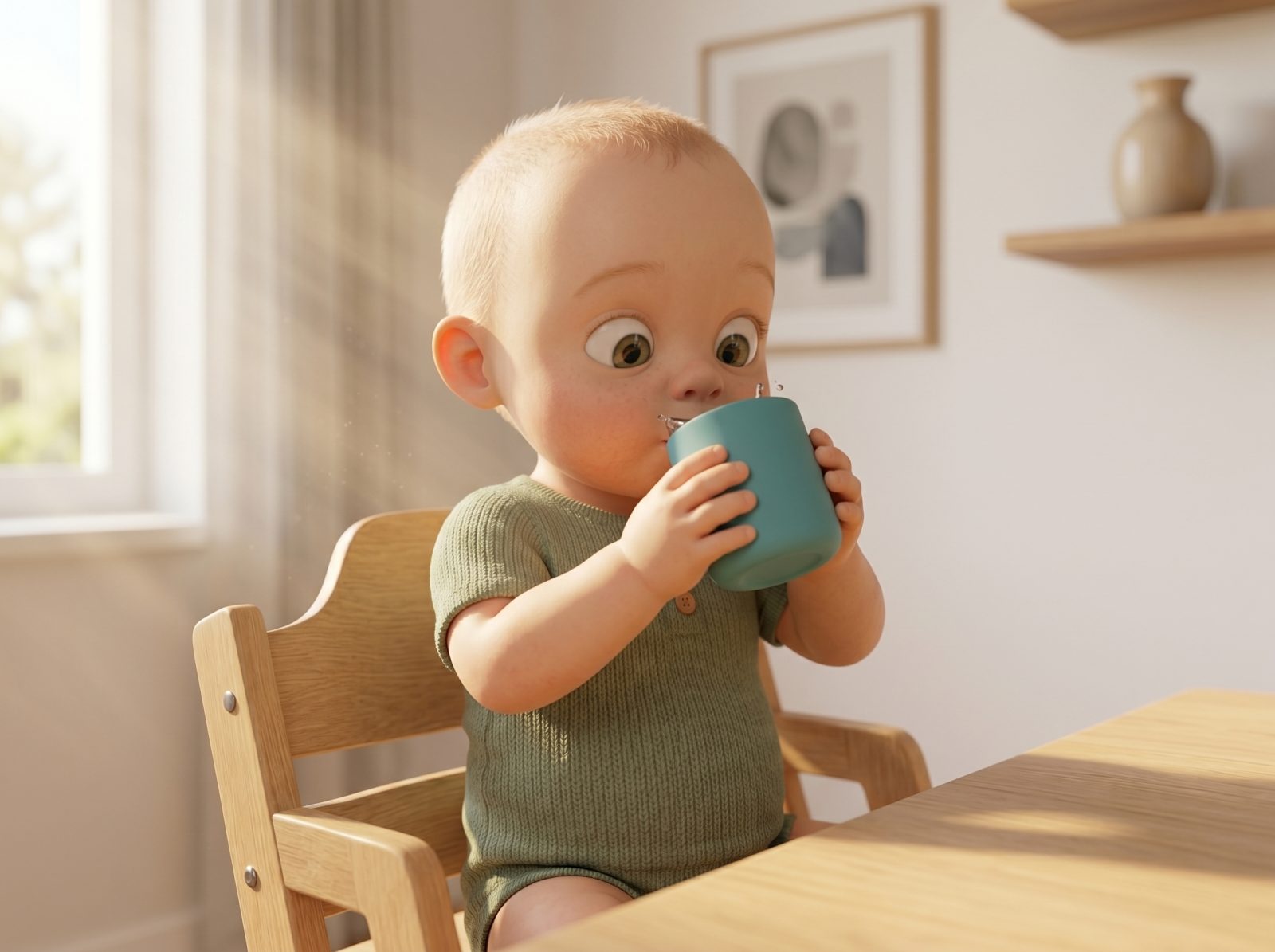
The toddler holds a small, open cup without a lid with one or both hands and drinks from it, with some spills. This skill requires lip closure, tongue control, and careful wrist adjustments to prevent tipping too quickly. It is critical for oral-motor development and transitioning away from bottles.
- 1. Use a small, lightweight, unbreakable plastic or silicone cup that fits easily in a toddler's small hands.
- 2. Fill the cup with only 1u20132 tablespoons of water initially to minimize the impact of inevitable spills.
- 3. Sit with the toddler during meals, demonstrating how to bring the cup to your lips and sip slowly.
- 4. Provide a supportive hand on the bottom of the cup to help them regulate the flow during early attempts.
- 1. Avoid scolding the toddler for spills; keep the atmosphere relaxed and encouraging.