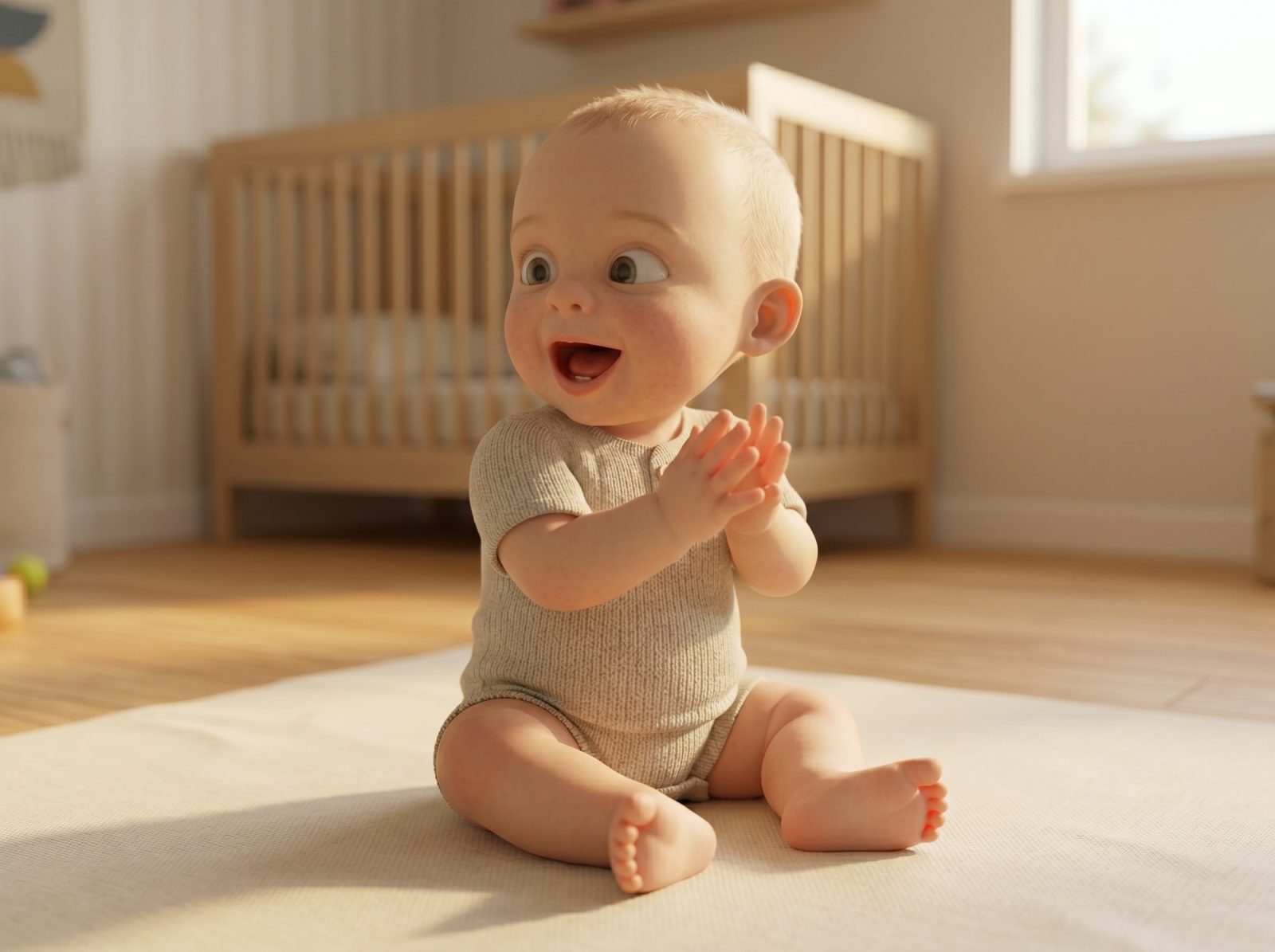
Claps when excited
Typical Timing & Development Window
Visual Timeline & Milestone Benchmarks
What these numbers mean
The average age babies first begin showing early signs of this skill. Before this, it's simply too early — there's nothing to worry about.
The midpoint age: half of babies have reached this milestone by here, half a little later. It's a typical target, not a deadline.
How spread out the timing is. About two-thirds of babies achieve it within one standard deviation of the median (the shaded band, wk 49–55). Wide bands mean a normal range of variation.
A gentle check-in point. If your baby hasn't shown this by around here, it can be worth mentioning to your pediatrician — most often it's still perfectly fine, just later.
About this milestone
The toddler claps their hands together to show joy, excitement, or accomplishment. This milestone requires bilateral hand coordination, motor planning, and the symbolic expression of positive emotions. It is an important indicator of social engagement and shared positive emotion.
- 1. Play hand-clapping games like 'Pat-a-Cake' or 'Pease Porridge Hot', guiding their hands gently to help them feel the motion.
- 2. Encourage the toddler to clap along to the rhythm of simple, happy children's songs.
- 3. Praise their efforts warmly when they try to clap, reinforcing their expressive hand movements.
- 1. Avoid keeping their hands occupied with toys constantly; give them plenty of hands-free opportunities to express themselves.