
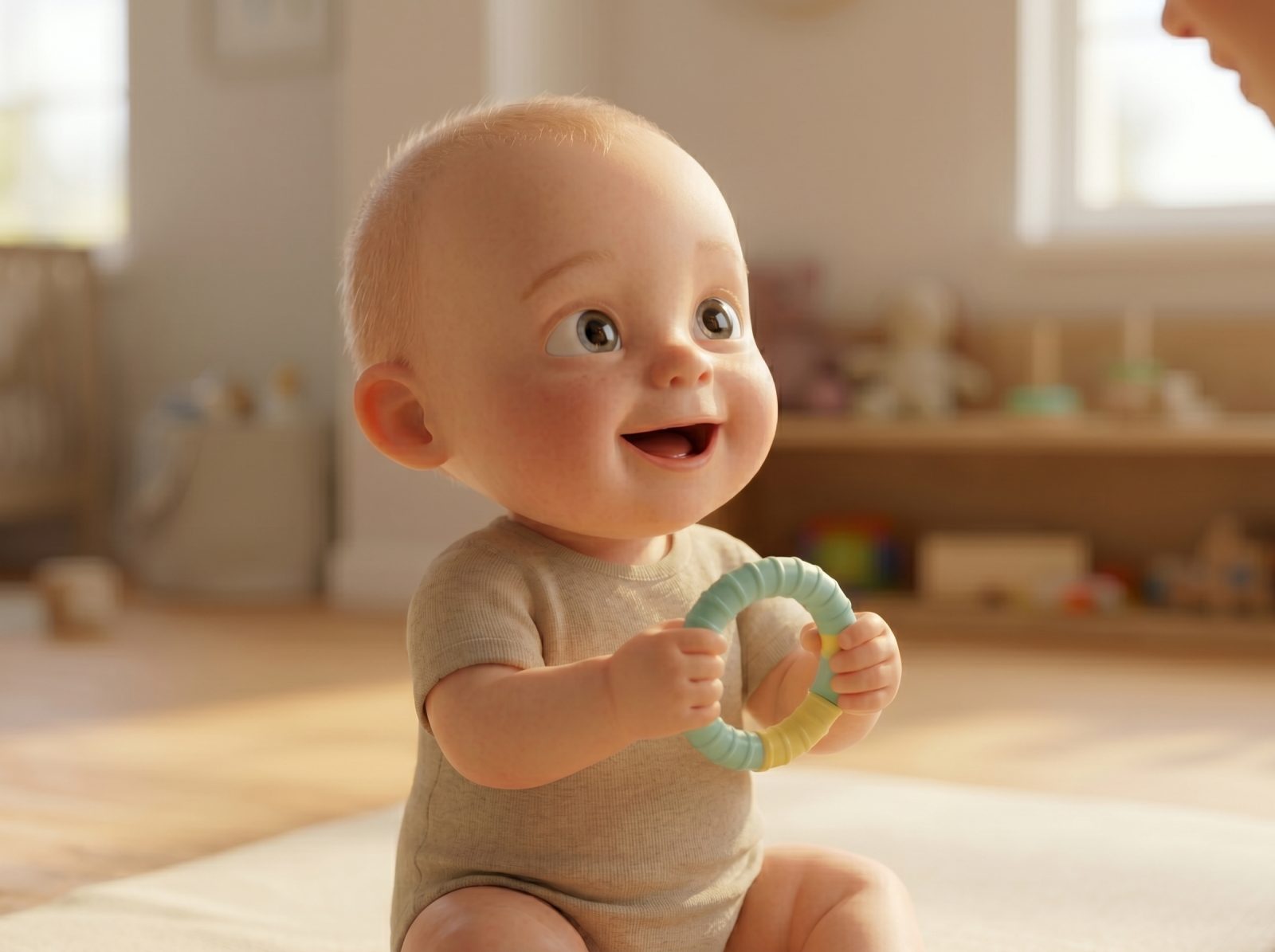
6 Months: Hand-to-Hand Transfer & Reciprocal Smile
Typical Timing & Development Window
Visual Timeline & Milestone Benchmarks
What these numbers mean
The average age babies first begin showing early signs of this skill. Before this, it's simply too early — there's nothing to worry about.
The midpoint age: half of babies have reached this milestone by here, half a little later. It's a typical target, not a deadline.
How spread out the timing is. About two-thirds of babies achieve it within one standard deviation of the median (the shaded band, wk 22–26). Wide bands mean a normal range of variation.
A gentle check-in point. If your baby hasn't shown this by around here, it can be worth mentioning to your pediatrician — most often it's still perfectly fine, just later.
About this milestone
The infant transfers small objects from one hand to the other and responds to direct caregiver engagement with consistent smiles, vocalizations, and eye contact, confirming early motor and social-emotional bonding limits.
- 1. Present a lightweight, easy-to-grip rattle directly to one hand, then offer a second enticing object to prompt your baby to switch the first toy over.
- 2. Respond immediately with warm smiles, direct eye contact, and loving speech when your baby initiates a bid for your attention.
- 3. Play simple mirror games together, letting your baby see their own happy expressions and hand movements.
- 1. Avoid forcing a hand preference; hand-to-hand transferring requires symmetric, natural use of both sides of the body.
- 2. Do not offer heavy, sharp, or complex toys that are difficult for an unrefined grasp to transition between hands safely.
- 3. Avoid ignoring or failing to return your baby's social smiles, as responsive interactions build secure attachment paths.